

Understand your risks. Recognise the signs. Give your heart the attention it deserves.
Why Heart Health Matters in Your 30s
In your 30s, you may know your work schedule, monthly expenses and next holiday dates better than your blood pressure or cholesterol levels. Heart health can feel like a concern for another decade.
Yet some cardiovascular risks develop quietly, long before you feel unwell. Being young, active or a healthy weight does not rule them out.
Heart attack risk increases with age. Understanding your risks earlier gives you more time to address them.
What Puts Young Indians at Risk?
South Asian ancestry is recognised as a factor that can increase cardiovascular risk. It does not determine an individual’s future, but belongs in the wider picture alongside family history, cholesterol, blood pressure, diabetes and tobacco use.1
Daily Habits and Underlying Conditions
Long periods of sitting, limited physical activity and diets high in salt, refined carbohydrates or unhealthy fats can contribute. These factors often overlap: someone may exercise regularly while also having high blood pressure or an inherited cholesterol disorder.
High blood pressure and raised cholesterol often have no obvious symptoms. How you feel after a busy day or how easily you finish a workout, cannot replace appropriate checks.
Risk assessment brings these measurements together with your history, rather than judging one factor in isolation.

A gym routine is valuable. It cannot tell you everything about your cardiovascular health.
What Your Family History Can Tell You
Tell your doctor if a parent or sibling developed heart disease early, particularly before 55 in a male relative or 65 in a female relative.
Bring details of the diagnosis and their age when it happened.
What Is Lipoprotein(a)?
Lipoprotein(a) or Lp(a), is a cholesterol-carrying particle whose level is largely inherited. High levels can increase cardiovascular risk.
It is not included in a standard cholesterol test.
The American Heart Association recommends that adults have Lp(a) measured at least once. A clinician can interpret it alongside your other risks.
Healthy habits remain useful even though they generally do not lower Lp(a) itself
Warning Signs You Should Never Ignore
A heart attack does not always begin with dramatic chest pain.
Warning signs can include:
- Chest discomfort – pressure, squeezing, heaviness or discomfort.
- Pain or discomfort that spreads – to one or both arms, the jaw, neck or back.
- Unexplained breathlessness – with or without chest discomfort.
- Cold sweats, nausea or lightheadedness.
Chest discomfort may ease and return.
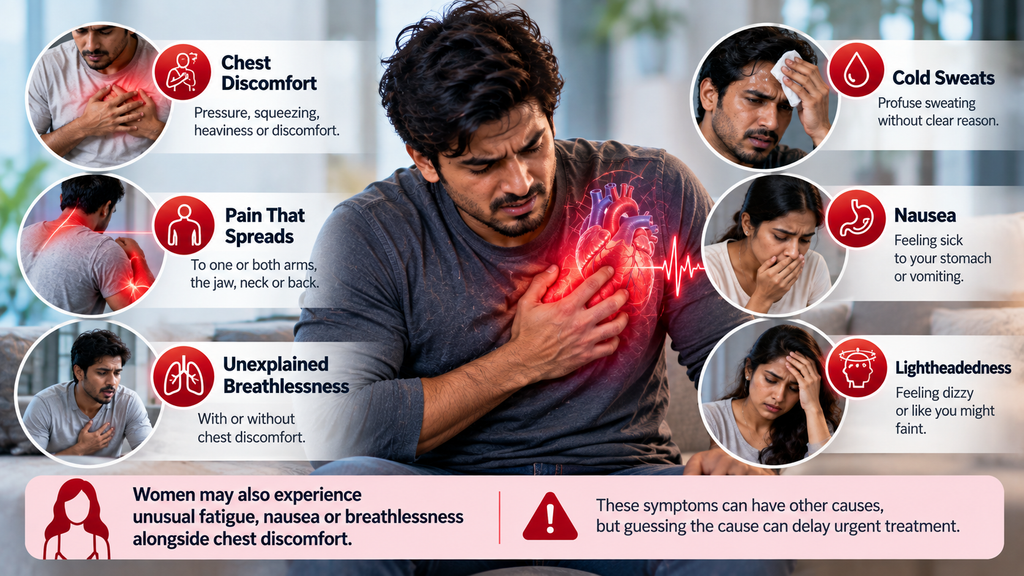
Women may also experience unusual fatigue, nausea or breathlessness alongside chest discomfort.
These symptoms can have other causes, but guessing the cause can delay urgent treatment.
Suspect a Heart Attack? Act Immediately.
Call 112 in India and avoid driving yourself.
Do not wait for a routine appointment or for the pain to become severe.4
Which Heart Checks Do You Need?
For people without symptoms, a routine consultation helps identify cardiovascular risks.
A clinician may review:
- Blood pressure
- Cholesterol
- Weight or waist measurement
- Blood glucose, when appropriate
- Personal and family medical history
Your age, previous results, medical history and family history help determine what to check and how often.
There is no single schedule that applies to everyone.5
An Abnormal Result Needs Context
Blood pressure may need repeat measurements, including measurements taken outside the clinic, before a diagnosis is made.
Your doctor can explain whether a finding needs monitoring or treatment.6
Bring previous reports and ask:
Which risks apply to me?
What changes would help most?
When should we review this again?
Does Everyone Need a Scan?
For someone without symptoms, a more extensive package is not automatically better.
Ask what each test assesses and whether its result would change your care. A clinician can help select appropriate investigations.7
Everyday Steps That Lower Your Risk
Avoid Tobacco
Ask for support with quitting if you smoke or use smokeless tobacco.
Move Regularly
Work towards 150 minutes of moderate physical activity each week, such as brisk walking, according to your health and ability.
Meals More Balanced
Include:
- Vegetables
- Fruits
- Pulses
- Whole grains
Limit excess salt, sugary drinks and frequently eaten fried or processed foods.
Manage Diagnosed Conditions
Follow treatment advice for diabetes, high blood pressure or high cholesterol.
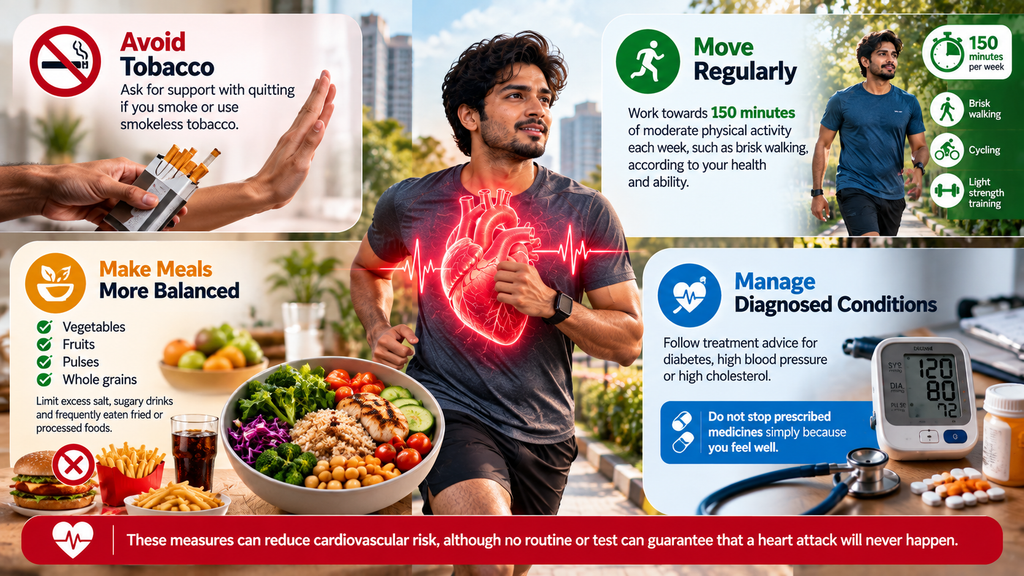
Do not stop prescribed medicines simply because you feel well.
These measures can reduce cardiovascular risk, although no routine or test can guarantee that a heart attack will never happen
Cardiac Care at Vasavi Hospitals
At Vasavi Hospitals, Bengaluru, cardiology consultations are supported by diagnostic services and a Philips flat-panel cath lab.
Different Investigations, Different Purposes
When clinically indicated, catheter-based coronary angiography is performed in the cath lab.
CT coronary angiography uses a separate CT scanner.
These investigations are selected according to symptoms, clinical findings and individual risk.
They are not routine requirements for everyone in their 30s.8
Start With a Conversation
Your 30s are a useful time to understand your heart health.
Knowing your personal risks and recognising urgent symptoms can help you make informed decisions about your care.
You do not need to arrive with a diagnosis.
Start with what you know about your health – and the questions you want answered.
Your Heart Doesn’t Have to Wait Until Your 40s.
Understand your risks.
Know the warning signs.
Take care of your heart today.
Talk to a Cardiologist at Vasavi Hospitals
If you have concerns about your heart health, family history, blood pressure, cholesterol or unexplained symptoms, consider discussing them with a cardiologist.
Visit Vasavi Hospitals, Bengaluru, and consult Dr. Krishna Kumar B R for a personalised evaluation and guidance based on your individual risk factors.
Your heart health is worth understanding – start the conversation today.