
Every year, the month of February, Gallbladder and Bile Duct Cancer Awareness Month. It focuses on two serious but often overlooked cancers. These cancers affect the biliary system, which plays an important role in digestion by carrying bile from the liver to the small intestine.
One of the major concerns is that these cancers are often asymptomatic. Early symptoms may be mild, unclear, or mistaken for common digestive issues. Due to which, most of the patients are diagnosed at an advanced stage.

Raising awareness among the people is critical because it helps them to recognize warning signs early and seek timely medical care.
Understanding Gallbladder and Bile Duct Cancer
What is Gallbladder and Gallbladder Cancer?
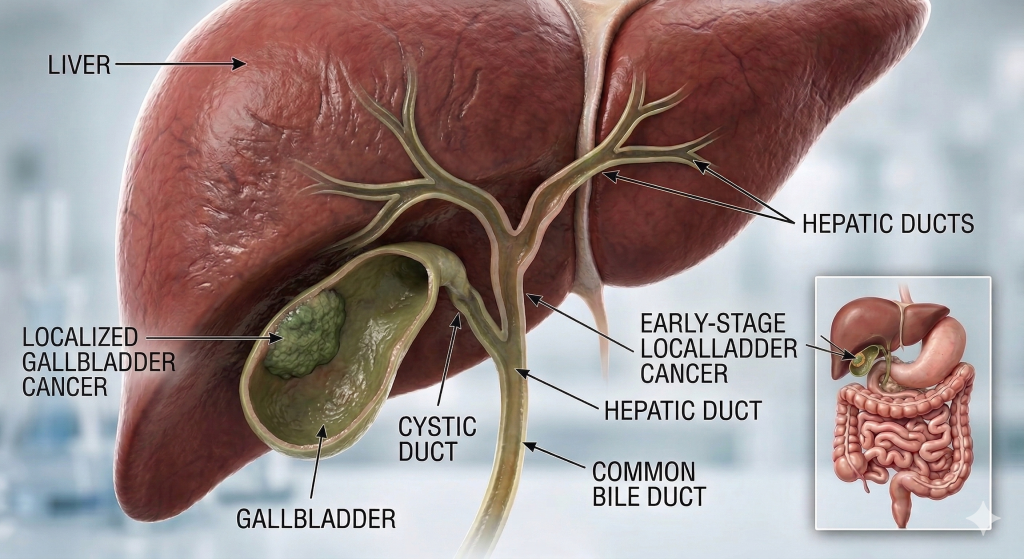
The gallbladder is a small organ located below the liver. Its main job is to store bile, a digestive liquid that helps the body break down fats. Gallbladder cancer happens when abnormal cells start growing uncontrollably in the gallbladder. In the early stages, it may not cause clear symptoms, which is why it is often detected late. Early diagnosis and treatment are important for better outcomes.
What is Bile Duct and Bile Duct Cancer?
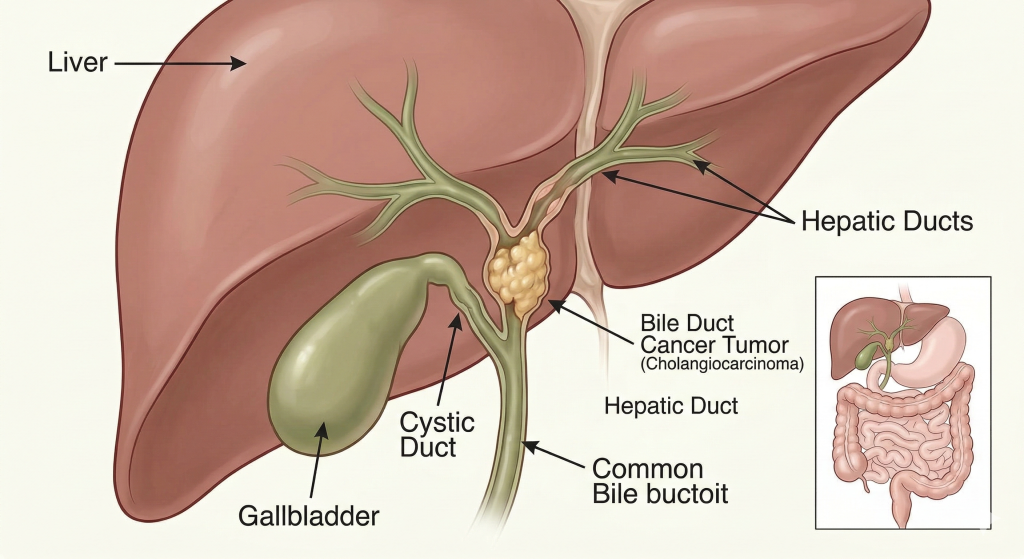
The bile ducts are thin tubes that carry bile from the liver and gallbladder to the small intestine to help in digestion. Bile duct cancer occurs when cancer cells develop in these tubes. This type of cancer can block the flow of bile, leading to symptoms like yellowing of the skin (jaundice), itching, or abdominal pain. Early medical attention can help in managing the condition more effectively.
Why These Cancers Often Diagnosed Late?
In the early stages, symptoms are usually vague and may include:
- Mild discomfort in the upper right abdomen
- Bloating or indigestion
- Loss of appetite
- Unexplained fatigue
These symptoms are often ignored or treated as minor stomach issues.
As the disease progresses, severe symptoms may appear:
- Yellow discoloring of the skin and eyes (jaundice) – Jaundice is especially important and should never be ignored, as it may indicate a blockage in the bile duct.
- Dark urine and pale-colored stools
- Persistent itching
- Unexplained weight loss
- Continuous abdominal pain
Who are people at Higher Risk?
Certain factors may increase the risk of gallbladder or bile duct cancer:
- Long-study gallbladder stone(gallstone)
- Chronic inflammation of the gallbladder or bile ducts – due to repeated infections
- Liver diseases like Hepatitis
- Obesity
- Age above 50 years
- Hereditary
Diagnosis and Modern Treatment Options
Early evaluation may include:
- Blood tests, including Liver Function Tests (LFTs)
- USG Scanning(Ultrasound) of the abdomen
- CT scan or MRI for detailed imaging
- Biopsy, if required
Treatment type depends on the stage of the cancer.
Common treatment options include:
- Surgery (removal of the gallbladder or affected bile duct)
- Chemotherapy to destroy cancer cells
- Radiation therapy
- Targeted therapy for specific genetic mutations
- Immunotherapy in selected cases
- Palliative care to improve comfort and quality of life
When diagnosed early, surgery offers the best chance of cure. Even in advanced stages, newer surgical treatments can help improve survival and quality of life.
It is also important to know that people can live normally without a gallbladder. After removal of the gallbladder, most of the patients adjust well with minor dietary changes to live a normal life.
Why Does Awareness Matters?
Gallbladder and Bile Duct cancers are often called “silent cancers” because they may not show clear warning signs in the early stages. Awareness encourages:
- Early medical consultation
- Timely diagnosis
- Better treatment outcomes
- Cancer free survival
If you experience persistent digestive discomfort, unexplained jaundice, or sudden weight loss, consult a specialist without delay.
A Message for This Awareness Month
The month of February reminds us to be aware of the quiet and silent warning signs, such as jaundice, persistent bloating, and dull abdominal pain, helping in early detection and leading to better diagnosis and treatment.
If you are experiencing any of these symptoms, please consult our General Surgery specialists, Dr. Ramesh T. S and Dr. Mohan Ram, for proper evaluation and diagnosis.