
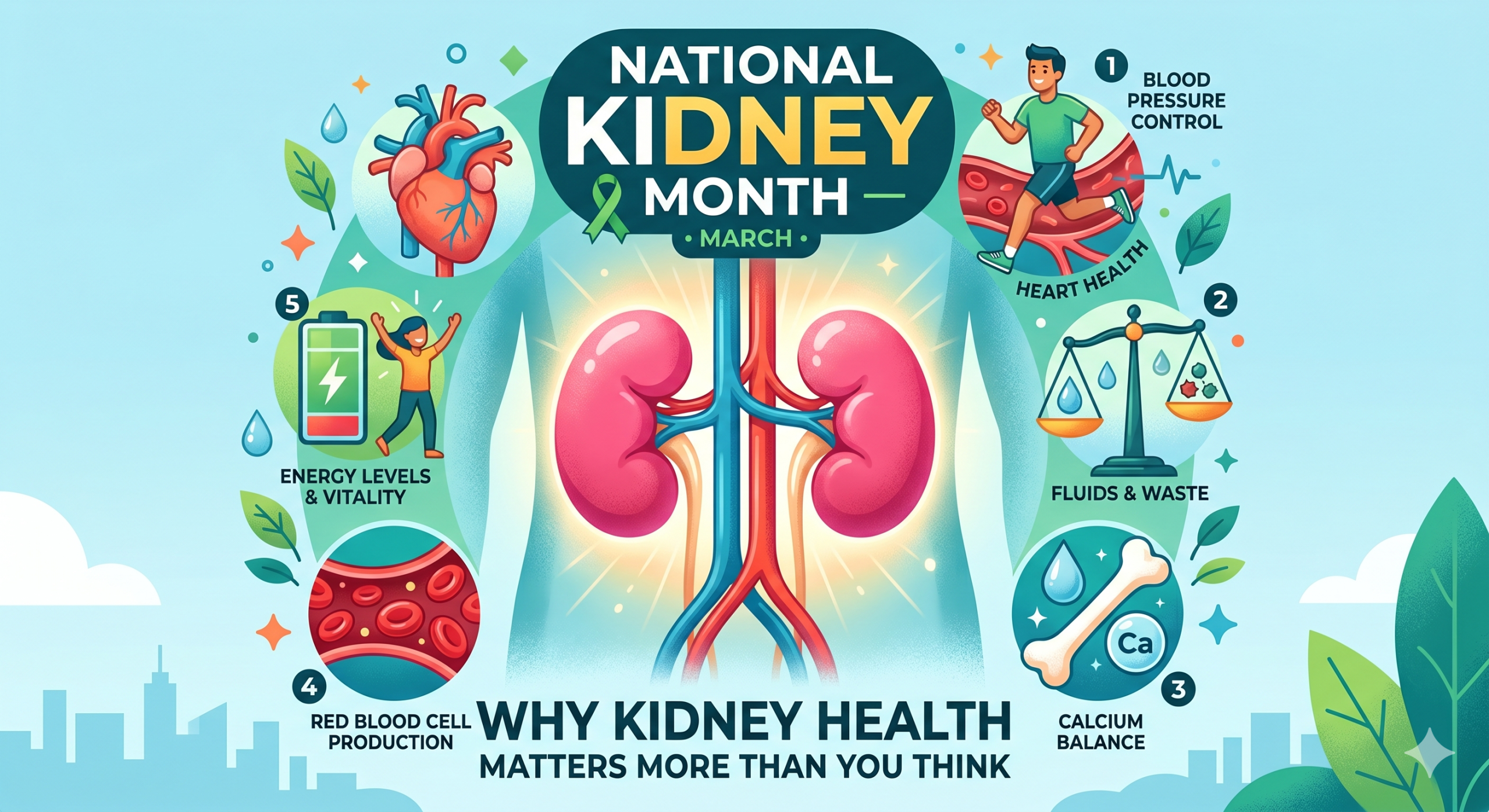
Every year, National Kidney Month is observed in March to raise awareness about the importance of kidney health and the prevention of kidney diseases. Millions of people around the world live with kidney-related problems, many of them without even realizing it.
Kidneys play a crucial role in maintaining overall health by filtering waste, balancing fluids, and regulating essential minerals in the body. Taking care of your kidneys can significantly improve your long-term health and quality of life.
This National Kidney Month is a reminder to understand how your kidneys work and what steps you can take to keep them healthy.
What Do the Kidneys Do?
The kidneys are two bean-shaped organs located on either side of the spine, just below the rib cage. Although they are small, they perform several vital functions necessary for the body.
Some key roles of the kidneys include:
- Filtering waste and toxins from the blood
- Balancing body fluids and electrolytes
- Regulating blood pressure
- Producing hormones that support red blood cell production
- Maintaining healthy bone strength
Healthy kidneys quietly perform these tasks every day without you noticing.
Why National Kidney Month is Important?
Kidney disease is often called a “silent disease” because symptoms may not appear until the condition has progressed significantly. Early awareness and regular health checkups can help detect problems before they become serious.
National Kidney Month encourages people to:
- Learn about kidney health
- Recognize early warning signs
- Adopt healthier lifestyle habits
- Get screened if they are at risk
Early detection can help prevent severe complications such as chronic kidney disease or kidney failure
Common Kidney Diseases
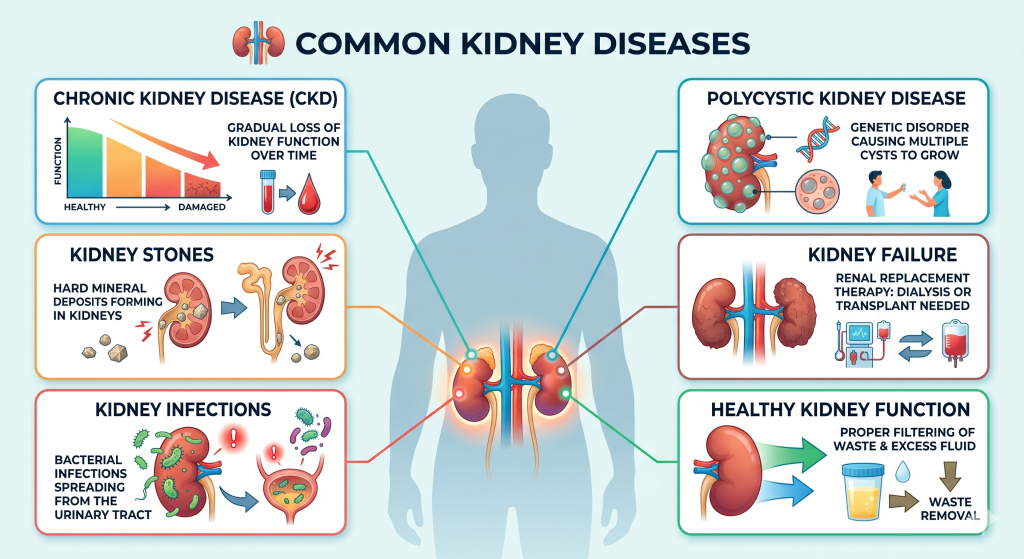
Several medical conditions can affect the kidneys and their ability to function properly. Some of the most common kidney-related problems include:
- Chronic Kidney Disease (CKD)
- Kidney stones
- Kidney infections
- Polycystic kidney disease
- Kidney failure
Many of these conditions develop gradually and may require medical management or lifestyle changes.
Signs and Symptoms of Kidney Problems
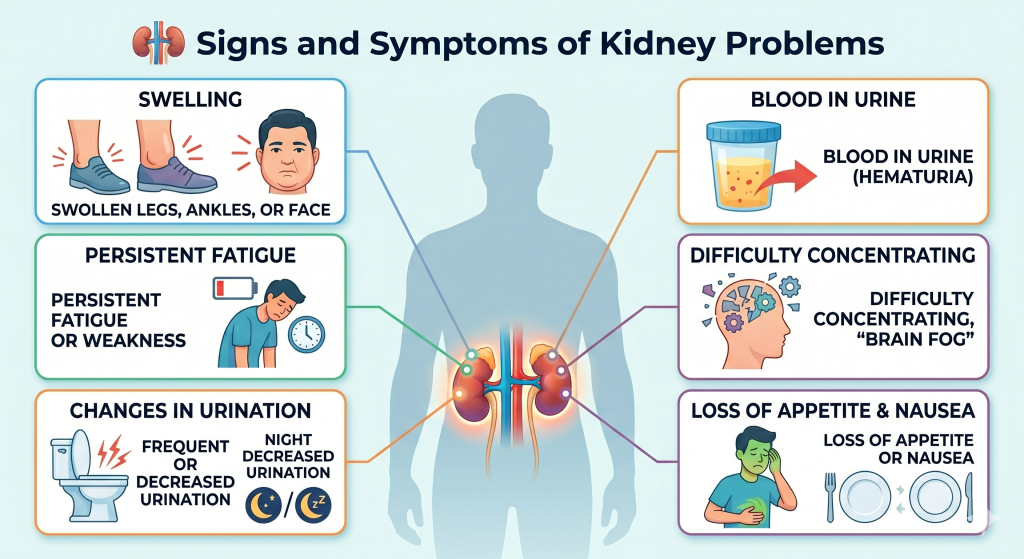
In the early stages, kidney disease may not cause noticeable symptoms. However, as the condition progresses, some warning signs may appear.
Common symptoms include:
- Swelling in the legs, ankles, or face
- Persistent fatigue or weakness
- Changes in urination patterns
- Blood in urine
- Difficulty concentrating
- Loss of appetite or nausea
If these symptoms persist, it is important to consult a healthcare professional for proper evaluation.
Risk Factors for Kidney Disease
Certain factors can increase the risk of developing kidney disease. Understanding these risks can help in taking preventive measures.
Major risk factors include:
- Diabetes
- High blood pressure
- Obesity
- Family history of kidney disease
- Smoking
- Excessive use of pain medications
Managing these conditions can significantly reduce the risk of kidney damage.
How to Prevent Kidney Disease and Protect Your Kidney Health?
Preventing kidney disease is often possible by following simple lifestyle habits and staying aware of your overall health. Since kidney problems can develop silently, taking preventive steps early can make a big difference in protecting your kidneys for the long term.
Here are some important ways to maintain healthy kidneys:
- Stay well hydrated by drinking enough water throughout the day, which helps the kidneys remove toxins from the body.
- Control blood pressure and blood sugar levels, especially if you have diabetes or hypertension.
- Limit salt and processed foods to reduce the burden on your kidneys.
- Exercise regularly to maintain a healthy weight and improve overall body function.
- Avoid smoking and excessive alcohol consumption, which can harm kidney function over time.
- Be cautious with painkillers and medications, as long-term or unnecessary use can damage the kidneys.
- Get regular health checkups, especially if you have risk factors like diabetes, high blood pressure, or a family history of kidney disease.
Adopting these healthy habits can significantly reduce the risk of kidney disease and help your kidneys function efficiently throughout your life.
Tips to Keep Your Kidneys Healthy
Maintaining kidney health involves adopting healthy lifestyle habits and regular medical checkups.
Some simple ways to protect your kidneys include:
- Drink enough water throughout the day
- Maintain a healthy blood pressure
- Control blood sugar levels if you have diabetes
- Eat a balanced diet with less salt
- Exercise regularly
- Avoid unnecessary medications and smoking
These habits can help support long-term kidney function and overall health.
Conclusion
National Kidney Month is a meaningful reminder that our kidneys work silently every day to keep our bodies healthy. Taking care of them through regular checkups, healthy habits, and early medical guidance can make a life-changing difference. Even small steps today can help prevent serious kidney problems in the future.
If you or your loved ones are experiencing kidney-related concerns, seeking expert care at the right time is important. With 15+ years of experience, Dr. Ramesh Hanumegowda (Urologist) and Dr. Sreenidhi H. C (Nephrologist) are dedicated to providing advanced care and guidance to help patients protect and maintain their kidney health.
Your kidneys take care of you every day – this National Kidney Month is the perfect time to take care of them.