
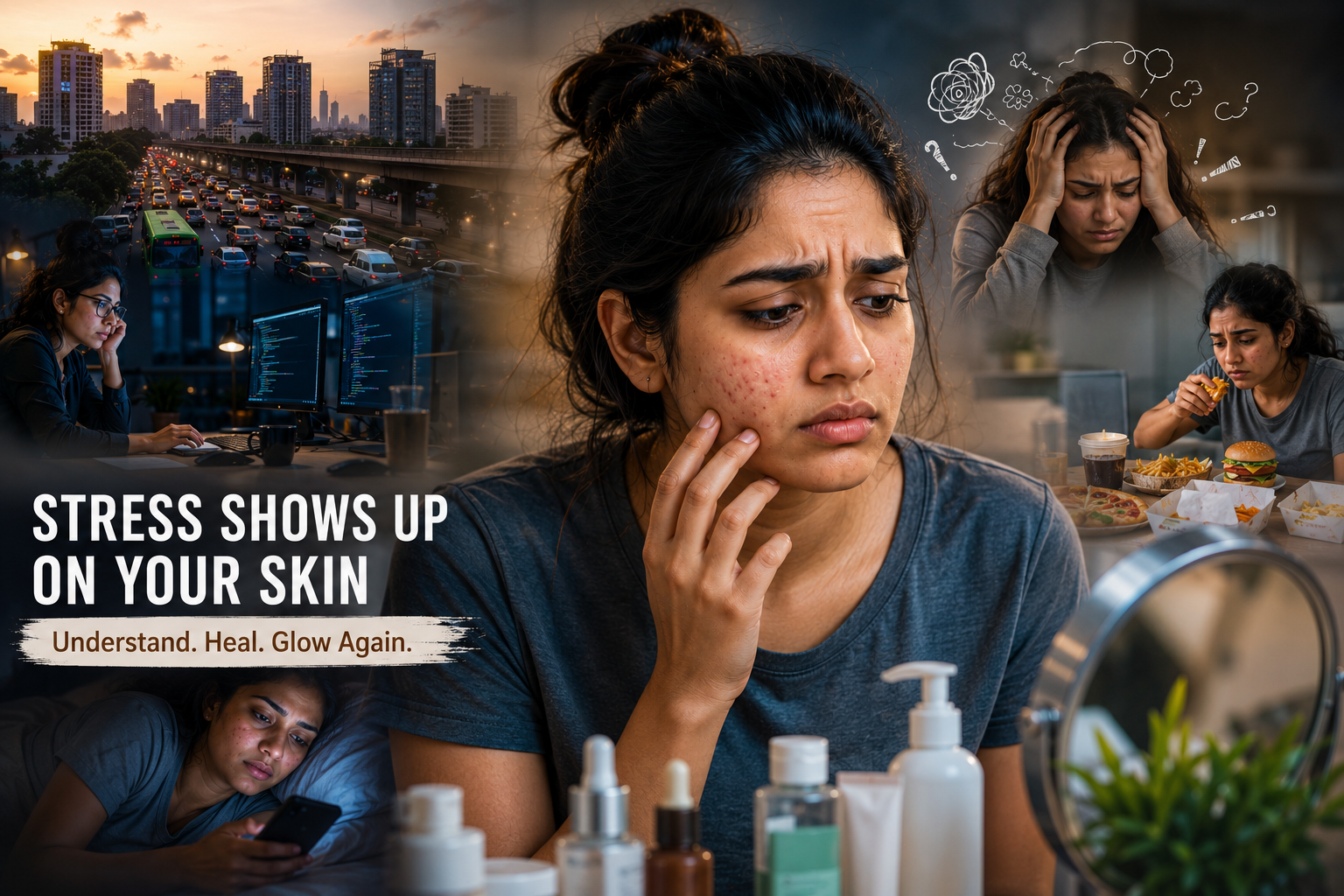
That Sudden Breakout Before an Important Meeting…
It’s Monday morning in Bengaluru.
You barely slept after finishing a late-night presentation. Your phone alarm snoozed three times. Breakfast was skipped. Coffee became your morning fuel. After sitting through traffic for more than an hour, you finally reach the office – only to notice a painful pimple near your jawline, itching around your neck or unusual hair fall while fixing your hair in the restroom mirror.
Most people immediately blame:
- Bangalore weather
- Oily food
- Pollution
- A “bad” face wash
- Lack of skincare
Very few stop and think:
“Could stress actually be affecting my skin?”
At Vasavi Hospitals, dermatologists increasingly see stress-related skin problems among IT professionals, students, entrepreneurs and young adults living fast-paced urban lifestyles.
And yes – stress can absolutely show up on your skin.
Why People Rarely Connect Stress with Skin Problems
When skin suddenly changes, most people rush to:
- Buy new skincare products
- Switch shampoos
- Avoid certain foods
- Search “best dermatologist near me”
- Try random Instagram skincare hacks
But emotional stress is often ignored completely.
The truth is, the skin and brain are deeply connected.
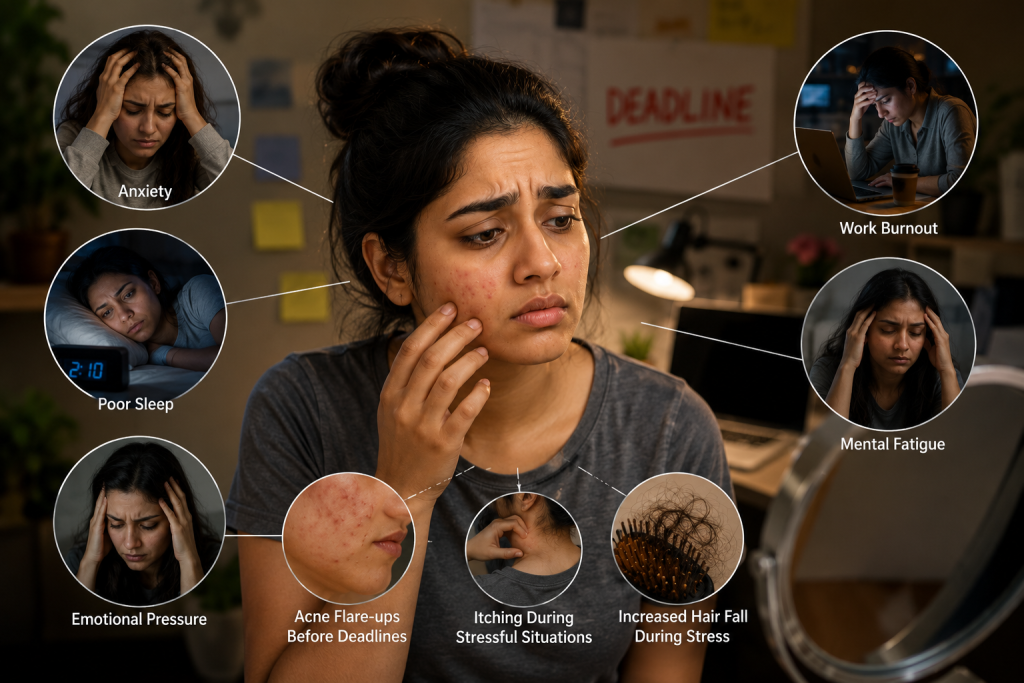
Your skin responds not only to weather and products, but also to:
- Anxiety
- Poor sleep
- Emotional pressure
- Work burnout
- Mental fatigue
This is why many people notice acne flare-ups before deadlines, itching during stressful situations or increased hair fall during emotionally difficult periods.
How Stress Affects the Skin
When the body experiences stress, it releases hormones like cortisol.
While cortisol helps the body respond to pressure temporarily, long-term stress creates imbalance inside the body.
This affects the skin in several ways:
Increased Oil Production
Stress hormones stimulate oil glands, making skin oilier and more acne-prone.
Inflammation Increases
Stress can trigger inflammation inside the body, worsening redness, pimples, itching and rashes.
Skin Barrier Weakens
The skin’s protective barrier becomes weaker during stress, making it more sensitive and easily irritated.
Poor Sleep Slows Skin Repair
Lack of sleep affects collagen production and natural skin healing.
Immunity Gets Disturbed
Stress can disturb immune responses, worsening eczema, psoriasis and allergic skin conditions.
In simple words:
Stress doesn’t just affect the mind – it directly affects skin health too.
Common Skin Problems Triggered by Stress
Stress Acne
One of the most common stress skin problems is acne.
Many people notice:
- Painful pimples during work deadlines
- Jawline acne before presentations
- Sudden breakouts during exams
- Oily skin during emotionally stressful weeks
Stress increases oil production and inflammation, which can clog pores and trigger acne flare-ups.
Stress acne is especially common among:
- IT employees
- College students
- Night-shift workers
- People with irregular sleep schedules
Stress Rash and Itching
Have you ever felt sudden itching during anxiety or emotional tension?
Stress can trigger:
- Red itchy patches
- Stress hives
- Heat rashes
- Unexplained skin irritation
Sometimes the skin becomes extremely sensitive even without allergies or infections.
Many people scratch more during stress without realizing it, which further worsens inflammation.
Hair Fall Due to Stress
One of the most emotionally upsetting effects of stress is sudden hair shedding.
A condition called telogen effluvium commonly occurs after:
- Prolonged stress
- Emotional trauma
- Burnout
- Sleep deprivation
- Severe work pressure
People often notice:
- More hair on pillows
- Excessive hair while combing
- Thinning near the scalp
- Increased hair fall during showers
Stress-related hair fall can become noticeable within weeks or months of intense emotional pressure.
Eczema and Psoriasis Flare-Ups
Stress does not always create skin diseases from scratch – sometimes it worsens existing conditions.
People with eczema or psoriasis often experience flare-ups during:
- Emotional stress
- Anxiety
- Sleep disturbances
- Mentally exhausting periods
The skin may become:
- Dry
- Flaky
- Itchy
- Inflamed
- Painful
Dark Circles and Dull Skin
Modern stressful lifestyles can visibly affect facial appearance.
Common causes include:
- Lack of sleep
- Dehydration
- Irregular meals
- Excessive screen exposure
- Stress eating
- Poor hydration
This often leads to:
- Dull skin
- Tired appearance
- Dark circles
- Uneven skin texture
How Bangalore Lifestyle Is Making Skin Stress Worse
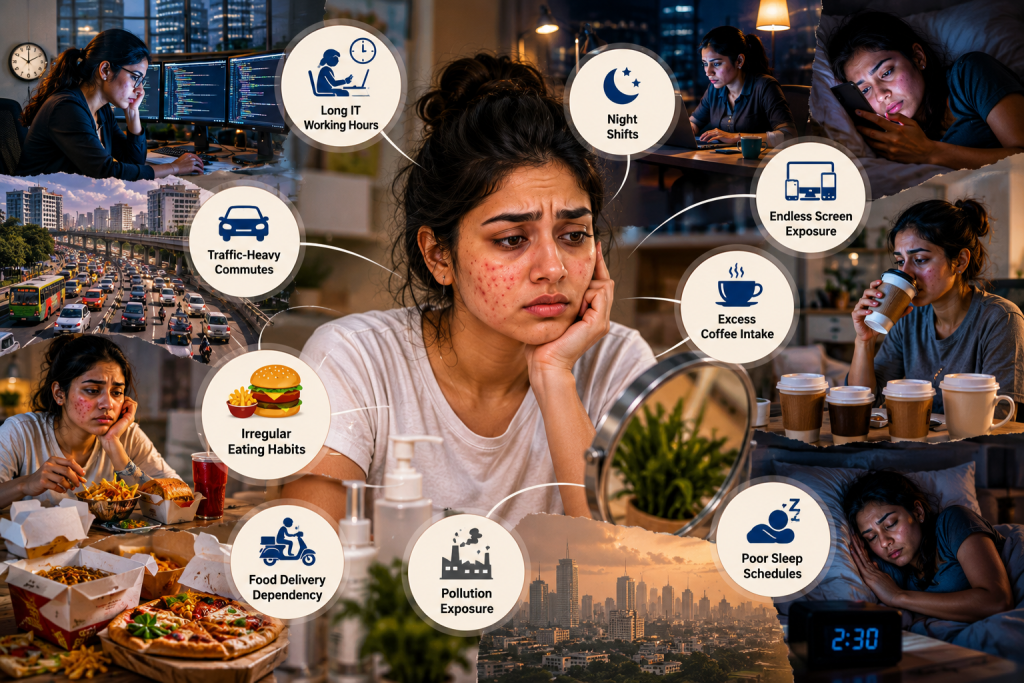
Urban Bangalore lifestyles are becoming increasingly stressful for the skin.
Common triggers include:
- Long IT working hours
- Night shift schedules
- Endless screen exposure
- Traffic-heavy commutes
- Excessive coffee consumption
- Irregular eating habits
- Dependence on food delivery
- Exposure to pollution
- Poor sleep schedules
Many professionals stay indoors all day under artificial lighting, work under constant pressure and barely get enough rest.
Over time, the skin starts reflecting that stress physically.
Symptoms People Commonly Ignore
Stress-related skin symptoms are often subtle initially.
Common warning signs include:
- Sudden acne breakouts
- Itching without allergy
- Increased hair fall
- Dry patches
- Stress rash
- Worsening eczema
- Skin sensitivity
- Dullness
- Excessive scratching
- Nail biting or skin picking habits
These symptoms may worsen during emotionally stressful periods even if skincare products remain unchanged.
When Skin Problems Need Medical Attention
While mild stress-related skin changes are common, some symptoms should not be ignored.
Seek professional evaluation if you experience:
- Painful cystic acne
- Severe itching
- Bleeding skin
- Sudden excessive hair loss
- Recurring rashes
- Skin infections
- Symptoms affecting sleep or confidence
- Persistent skin inflammation
Ignoring chronic skin problems can sometimes worsen both physical discomfort and emotional stress.
How Dermatologists Diagnose Stress-Related Skin Problems
At Vasavi Hospitals, dermatologists evaluate both the skin condition and lifestyle factors contributing to it.
Evaluation may include:
- Clinical skin examination
- Stress and sleep history
- Skincare assessment
- Allergy evaluation
- Diet and hydration review
- Hormone or blood tests in selected cases
The goal is to understand the root cause instead of only treating surface symptoms.
Treatment Options for Stress Skin Problems
Treatment depends on the specific condition and severity.
Dermatologists may recommend:
- Acne treatment creams
- Anti-inflammatory medications
- Medicated shampoos
- Hair fall treatments
- Skin barrier repair products
- Hydration improvement
- Sleep correction
- Stress management strategies
- Dietary improvements
An important thing many people miss:
Treating only the skin without addressing stress may not give long-term improvement.
Practical Ways to Protect Skin from Stress
Small lifestyle changes can genuinely improve stress and skin health.
Helpful habits include:
- Sleeping 7–8 hours regularly
- Staying hydrated
- Reducing excessive caffeine
- Following a simple skincare routine
- Regular exercise
- Taking screen breaks
- Eating balanced meals
- Avoiding self-medication
- Using sunscreen daily
- Practicing stress management techniques
Consistency matters more than expensive skincare products.
How Vasavi Hospitals Helps Patients with Stress-Related Skin Problems
The Dermatology Department at Vasavi Hospitals provides evaluation and treatment for various stress-related skin conditions.
Services include:
- Acne and allergy evaluation
- Stress rash treatment
- Eczema and psoriasis care
- Hair fall assessment
- Personalized skincare guidance
- Lifestyle-based dermatology care
Experienced dermatologists focus on both skin treatment and the lifestyle factors contributing to recurring flare-ups.
Stress Shows Up on the Skin More Than We Realize
Stress is often treated like something “normal” in modern life.
But the body keeps score.
Sometimes it appears as:
- Painful acne
- Unexplained itching
- Hair fall
- Dull skin
- Worsening eczema
- Tired-looking skin that no skincare product seems to fix
The important thing to remember is this:
Stress-related skin problems are real, common and treatable.
Understanding the connection between emotional health and skin health is often the first step toward long-term improvement.
Book a dermatology consultation at Vasavi Hospitals, Bangalore.
Frequently Asked Questions
1. Can stress really cause acne?
Yes. Stress acne is extremely common, especially among students and working professionals. Stress increases cortisol levels, which stimulates oil production and inflammation in the skin. This can lead to painful pimples, jawline acne and sudden acne flare-ups during deadlines or emotional stress.
2. Why does my skin itch when I’m stressed?
Stress can trigger inflammation and increase skin sensitivity, leading to itching even without allergies or infections. Many people experience stress rash, hives or unexplained itching during emotionally difficult periods. Poor sleep and anxiety can worsen the sensation further.
3. Can anxiety trigger skin rashes?
Yes. Anxiety and stress can trigger stress rash, hives and redness in some individuals. Emotional stress affects immune responses and inflammation, which may lead to itchy or irritated skin patches. These symptoms can worsen during periods of mental pressure.
4. Does stress increase hair fall?
Stress-related hair fall is very common. Conditions like telogen effluvium can cause sudden excessive hair shedding after prolonged stress, burnout or sleep deprivation. Hair fall due to stress may appear weeks after emotionally difficult situations.
5. Can lack of sleep damage skin health?
Absolutely. Poor sleep affects collagen repair, hydration balance and skin recovery. Lack of sleep commonly causes dull skin, dark circles, acne flare-ups and increased skin sensitivity. Sleep is essential for healthy skin repair.
6. How do dermatologists treat stress-related skin problems?
Dermatologists usually combine skincare treatment with lifestyle correction. Treatment may include acne creams, anti-inflammatory medicines, hydration advice, hair fall treatment, stress management and sleep improvement strategies depending on the condition.
7. When should I see a dermatologist for stress acne?
You should consult a dermatologist if acne becomes painful, cystic, recurrent or starts affecting confidence and daily life. Early treatment can help reduce inflammation, prevent acne scars and improve long-term skin health.