
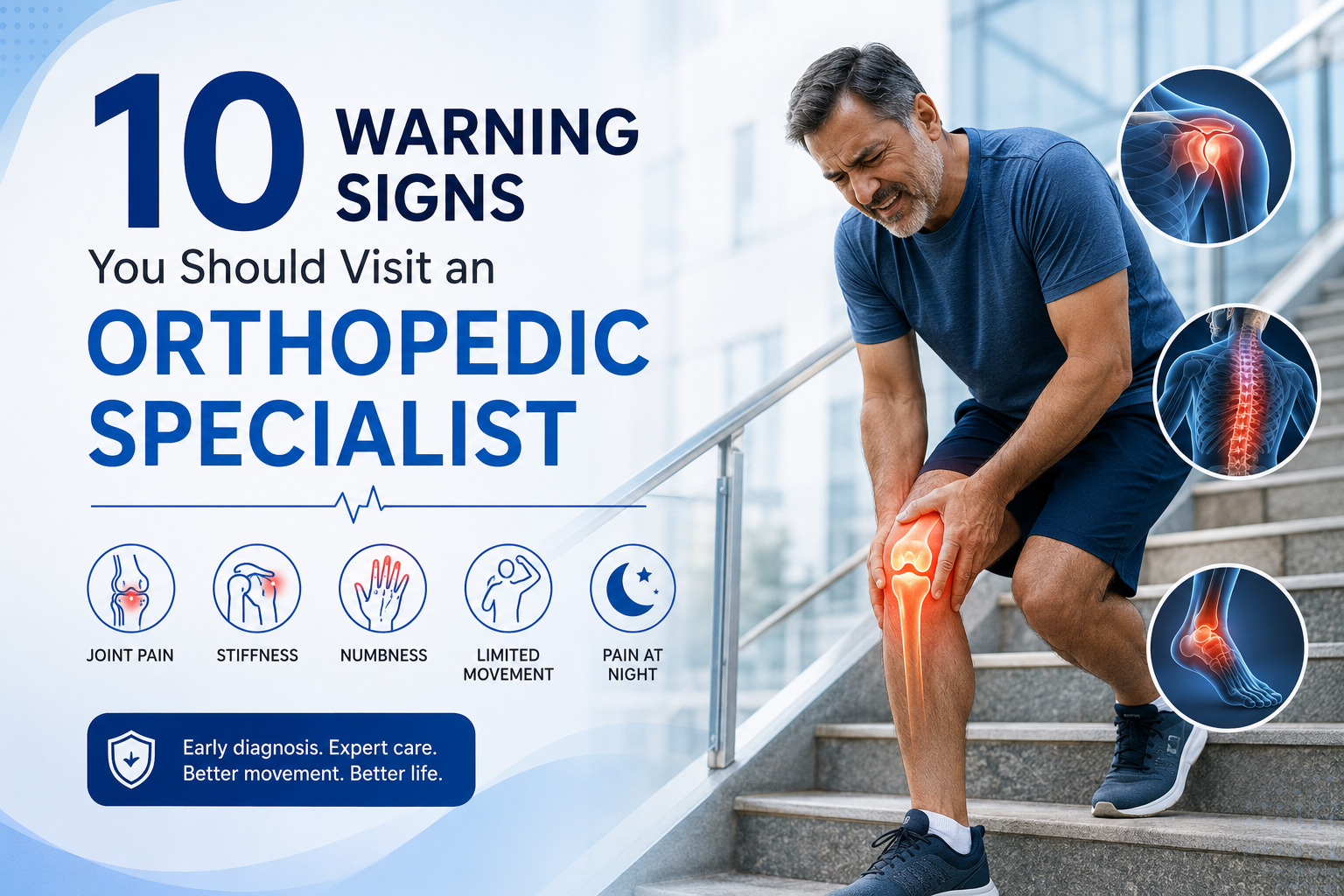
INTRODUCTION
Your knee sounds like popcorn every time you climb stairs. Your back sends resignation letters every Monday. Your shoulder winces when you reach for coffee.
You tell yourself it’ll pass. You’re just getting older. You’ll take a painkiller.
But here’s the truth: your body isn’t being dramatic. It’s asking for help. And the difference between fixing it in 6 weeks versus 6 months often comes down to one decision-whether you listen when pain whispers or wait until it screams.
Most orthopedic problems respond brilliantly to early treatment. The issue is that most of us ignore them until they become serious.
WHY WE IGNORE ORTHOPEDIC SYMPTOMS
“It’ll go away on its own.” This is the excuse that costs us the most. Sometimes minor aches do improve with rest, but persistent pain isn’t minor-it’s a warning signal. By the time you realize it’s serious, you’ve lost weeks where early intervention could have prevented complications.
Other common delays:
- “I’m getting older-aches are normal.” Wrong. Chronic pain is treatable at any age.
- “It’s just because I worked out.” Soreness fades in 2-3 days. Persistent pain doesn’t.
- “I’ll take a painkiller.” Pain relievers mask the problem without fixing it.
- “I don’t have time for doctor visits.” But you’ll have time when pain forces you to take weeks off work.

The cost of waiting: Inflammation worsens, compensation patterns develop (stressing other joints), damage becomes permanent and treatment becomes complex. What could’ve been managed with physiotherapy now requires injections or surgery.
WHAT DOES AN ORTHOPEDIC SPECIALIST TREAT?
An orthopedic specialist is a doctor specializing in your musculoskeletal system-bones, joints, ligaments, tendons, muscles and spine. They treat:
- Fractures and breaks
- Joint pain and arthritis
- Ligament and tendon injuries
- Sports injuries
- Back and neck pain
- Shoulder, knee, hip, ankle problems
- Nerve compression and sciatica
- Osteoporosis and bone density issues
Think of them as the expert who helps you move through life without pain.
5 CRITICAL WARNING SIGNS
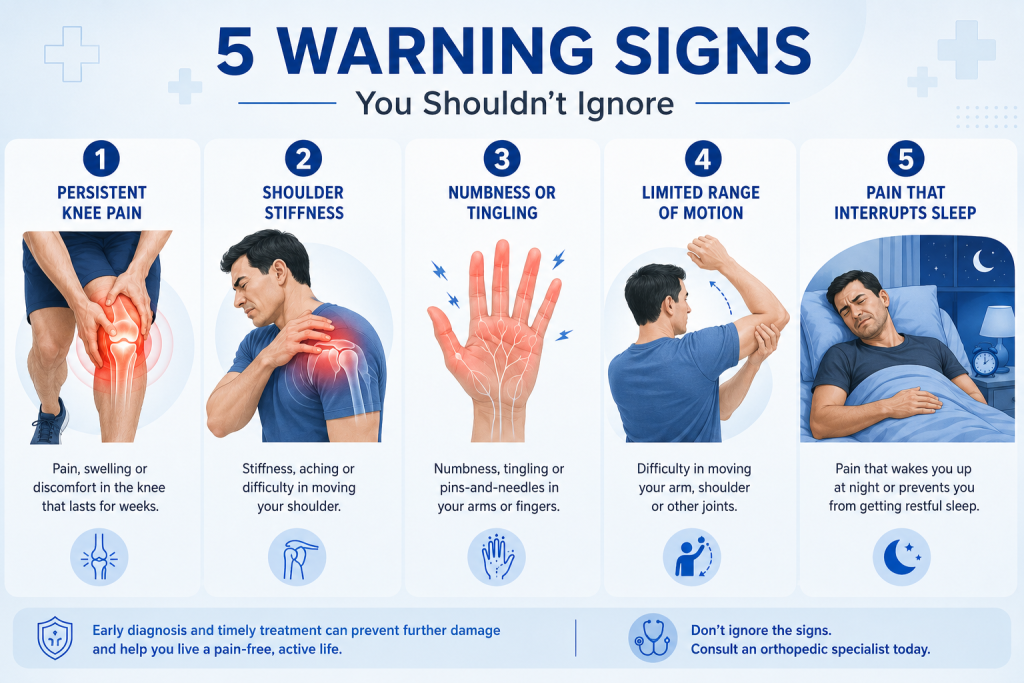
1. Persistent Joint Pain That Won’t Go Away
Your knee, shoulder, hip or ankle hurts consistently-some days worse, never fully resolved. It might feel like a dull ache, sharp twinge or burning sensation.
Why it matters: Persistent joint pain signals an underlying condition-osteoarthritis, inflammatory arthritis, overuse injury or cartilage damage. Without intervention, it progressively worsens.
When to see a specialist: If pain lasts 3-4 weeks and interferes with daily activities, get evaluated. Early diagnosis prevents structural damage.
2. Pain Lasting More Than 2-3 Weeks
You injured yourself three weeks ago and expected recovery by now. The pain is still there.
Why it matters: Most minor injuries resolve within 7-14 days. Pain lasting beyond this window indicates something more serious-grade 2-3 sprains, tendon injuries, microfractures or poor healing progression.
When to see a specialist: If pain hasn’t improved after 2-3 weeks despite conservative care or if it’s worsening, seek professional evaluation immediately. Delayed diagnosis leads to chronic pain and longer recovery.
3. Limited Range of Motion in a Joint
You can’t extend your arm fully, your knee won’t straighten, you can’t turn your head as far. You’re unconsciously moving differently to work around it.
Why it matters: Limited mobility is progressive. Without treatment, joints become stiffer as scar tissue forms and muscles atrophy. What starts as noticeable stiffness can become significant disability.
Possible causes: Frozen shoulder, arthritis, tendon injuries, ligament damage or muscle contractures.
When to see a specialist: If range of motion decreases and persists beyond a week, get it evaluated. Early physiotherapy can restore mobility before permanent stiffness develops.
4. Numbness or Tingling in Arms or Legs
Your fingers feel numb, your arm falls asleep but doesn’t wake up, you feel pins-and-needles or a burning sensation in your limbs. It might come and go or be constant.
Why it’s different: Numbness and tingling are neurological-a nerve is compressed or irritated. This is fundamentally different from simple pain and requires prompt evaluation because prolonged compression can cause permanent nerve damage.
Possible causes: Herniated disc, spinal stenosis, sciatica, carpal tunnel syndrome or pinched nerves.
When to see a specialist: If numbness or tingling persists for more than a few days or worsens, seek immediate evaluation. Imaging can identify nerve compression sources.
5. Pain That Interrupts Your Sleep
Pain wakes you multiple times per night. You can’t find a comfortable position. You wake stiff and sore.
Why it’s serious: Sleep is when your body heals. If pain prevents sleep, your body isn’t recovering and your health suffers. Night pain often indicates active inflammation that’s present even at rest-suggesting a more serious condition.
When to see a specialist: If pain regularly interrupts sleep, get professional evaluation. Don’t let sleep deprivation compound your problem-early intervention restores both comfort and rest.
COMMON CONDITIONS PEOPLE IGNORE
- Osteoarthritis: Joint wear that people dismiss as “normal aging”-but early management significantly slows progression.
- ACL Injuries: Sports injuries people work through, creating knee instability and additional injuries.
- Rotator Cuff Injuries: Shoulder tendon tears limiting arm movement, often painfully ignored by athletes.
- Frozen Shoulder: Joint stiffness taking years to recover without treatment; responds well to physiotherapy.
- Sciatica: Sciatic nerve compression causing leg pain-many live with unnecessary suffering instead of seeking treatment.
- Herniated Disc: Disc rupture pressing on nerves, causing severe pain and numbness that significantly impacts quality of life.
WHEN TO VISIT IMMEDIATELY
Seek emergency care for:
- Sudden inability to bear weight (possible fracture)
- Severe swelling (possible compartment syndrome)
- Suspected fracture (needs immobilization)
- Loss of sensation (nerve compression)
- Joint deformity after injury (possible dislocation)
- High fever with joint pain (possible infection)
- Numbness/weakness in legs (spinal cord compression)
HOW ORTHOPEDIC SPECIALISTS DIAGNOSE
Your specialist will:
- Review medical history: When did it start? How did it happen? What makes it better/worse?
- Perform physical exam: Check range of motion, strength, swelling, alignment
- Order imaging: X-rays (bone structure), MRI (soft tissues), ultrasound (tendons/ligaments)
- Run specialized tests: Blood tests for inflammation or autoimmune conditions; nerve conduction studies for nerve problems
MODERN TREATMENT OPTIONS
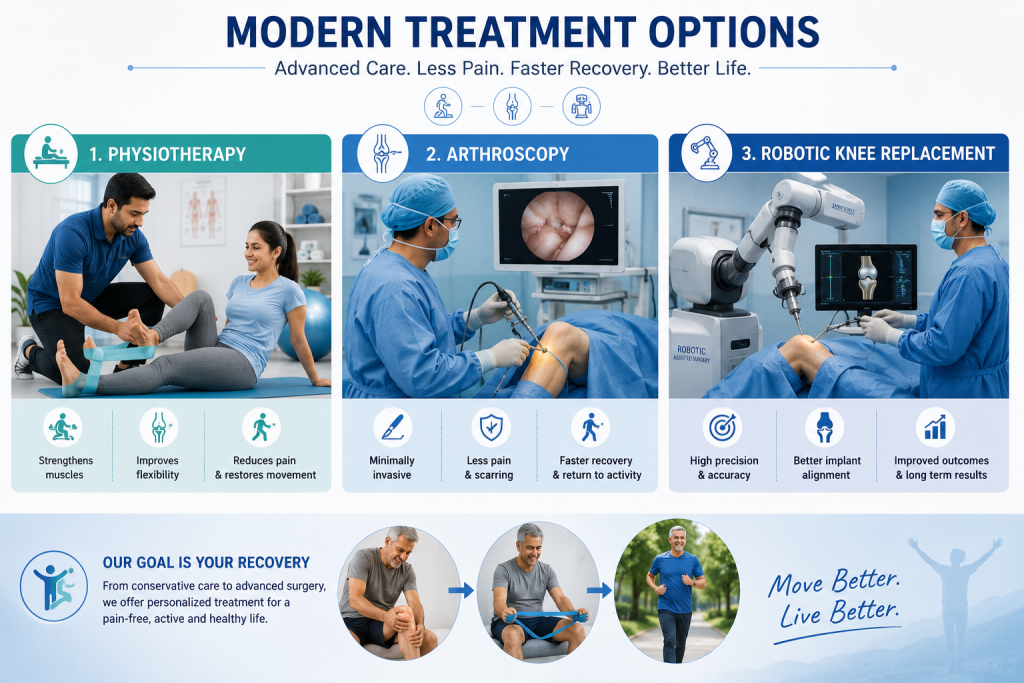
Conservative Treatment: Physiotherapy, medication, lifestyle modification, injections (cortisone, hyaluronic acid, PRP)
Minimally Invasive: Arthroscopy (camera-guided surgery with tiny incisions)
Surgical: Joint replacement, arthroscopic repair, reconstruction (ACL, rotator cuff), spinal procedures
Advanced Technology: Robotic-assisted joint replacement for improved precision and outcomes
DON’T NORMALIZE PAIN
Pain is a signal, not a character trait. Early treatment works better. A knee problem addressed in month two responds better to physiotherapy than the same problem in month six.
Acting early means:
- Full recovery without surgery
- Restored function and activity
- Prevention of long-term damage
- Faster return to normal life
- Maintained quality of life as you age
The cost of waiting:
- More time in pain
- Lost function and capability
- Complex problems requiring invasive treatment
- Longer recovery if surgery becomes necessary
FINAL THOUGHT
Your life shouldn’t be limited by pain you can treat. If you’re experiencing persistent joint or muscle pain, limited range of motion, sleep-interrupting pain or numbness in your limbs-don’t wait.
At Vasavi Hospitals, our orthopedic specialists are ready to help you restore function and eliminate pain. We offer comprehensive care from diagnosis through rehabilitation, using the latest diagnostic tools and treatment technologies.
Schedule your orthopedic consultation today. Early diagnosis usually leads to better outcomes.
FREQUENTLY ASKED QUESTIONS
Q: When should I see an orthopedic specialist vs. my regular doctor? A: If you have persistent bone, joint, muscle or spine pain lasting 3-4 weeks, an orthopedic specialist has specialized training and diagnostic tools your general doctor may not have. They can diagnose and treat faster.
Q: Will I need surgery? A: Not necessarily. Most orthopedic conditions respond to physiotherapy, injections and lifestyle modification. Surgery is typically a last resort.
Q: How long is recovery? A: Varies by condition. Minor strains: 2-4 weeks. Significant injuries or post-surgery: 3-6 months. Your specialist provides realistic timelines.
Q: Can orthopedic problems be prevented? A: Many can. Maintain healthy weight, stay active, use proper form during exercise, maintain good posture, protect joints during sports, manage diabetes and vitamin D levels.
Q: Is pain normal as you age? A: No. While aging brings changes, chronic pain isn’t inevitable. Most age-related conditions are manageable with proper care.