
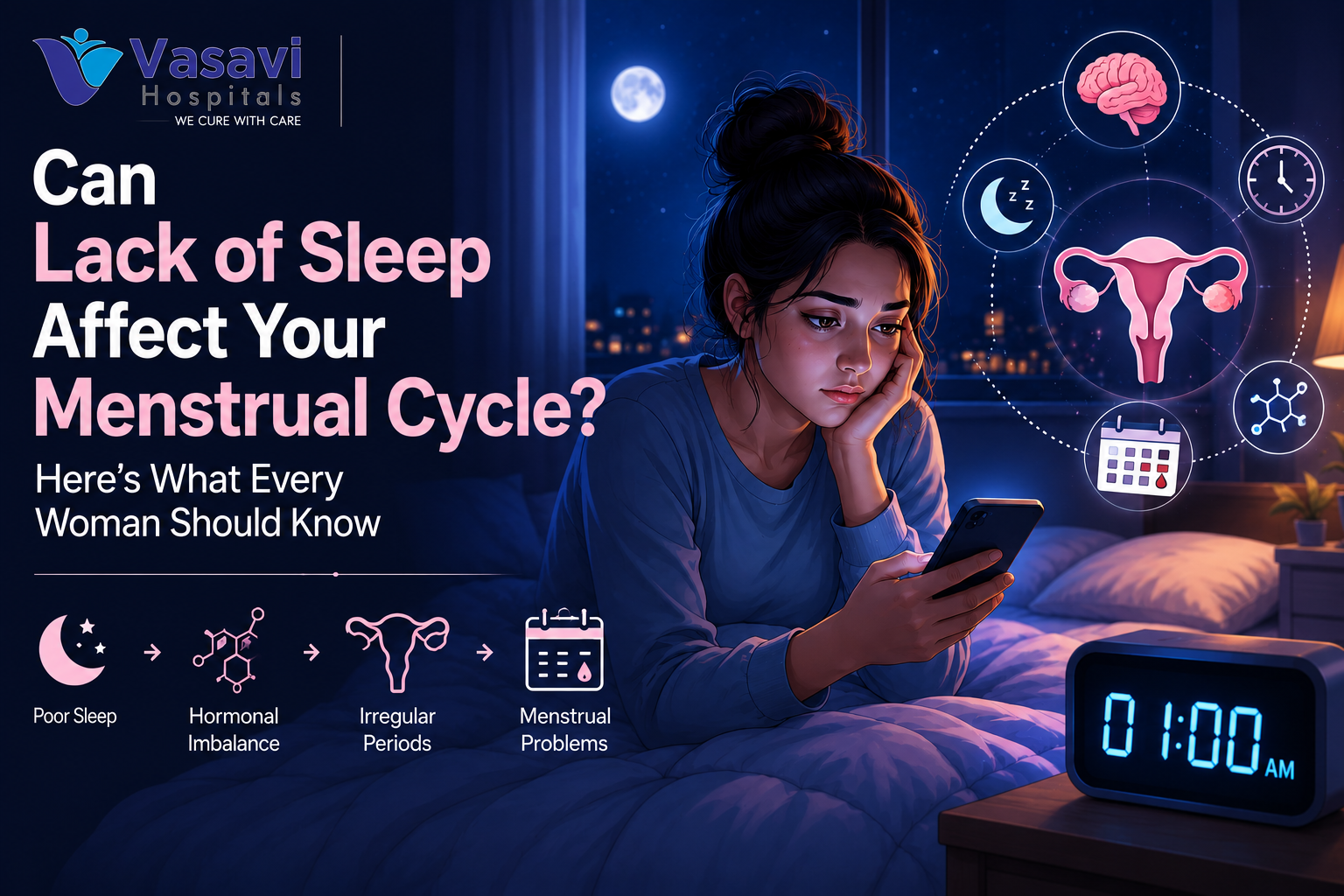
INTRODUCTION: YOUR MIDNIGHT SCROLL HAS A SECRET COST
It’s 11:47 PM. You’re scrolling Instagram. One more reel. One more story.
By 1:00 AM, you finally fall asleep. Your alarm goes off at 6:30 AM.
Five and a half hours of sleep. Coffee and determination get you through another day.
Here’s what you might not realize: while you’re scrolling, your hormones aren’t reading your Google Calendar. They’re simply noticing one thing: She’s not sleeping.
And that notification? It’s sending a ripple through your entire reproductive system.
Your ovaries notice when you don’t sleep.
Your periods notice. Your fertility notices. Your skin notices. The weight gain you can’t explain? That notices too.
This isn’t hyperbole. This is biology. And if you’ve been blaming irregular periods on “just how your body is” while running on four hours of sleep, this article is for you.
WHY SLEEP MATTERS FOR YOUR HORMONES
Sleep isn’t laziness. It’s when your body does its most critical repair work.
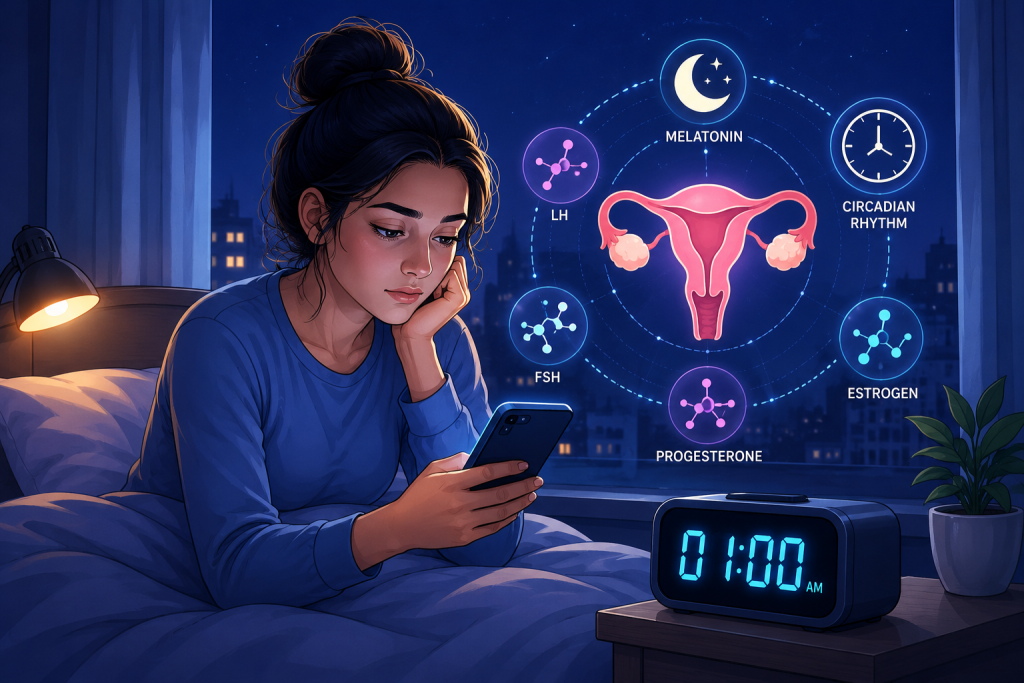
During sleep, your brain produces the hormones that run your entire reproductive system. Your circadian rhythm-your internal 24-hour clock-orchestrates this hormonal symphony. When you skip sleep, the conductor never shows up.
Think of it this way: your hormones are like employees in a company. Sleep is the manager. When the manager doesn’t show up, everything becomes chaotic.
Without consistent sleep, your body can’t produce hormones properly. Specifically:
- FSH and LH (the messengers telling your ovaries what to do)
- Estrogen and progesterone (your cycle’s main characters)
- Melatonin (your sleep hormone)
- Cortisol (your stress hormone)
- Leptin (your “I’m full” hormone)
These hormones work in precise rhythm. That rhythm depends on sleep.
CAN POOR SLEEP REALLY DELAY YOUR PERIOD?
Yes. Absolutely.
Your menstrual cycle starts when your hypothalamus releases GnRH, triggering a hormonal cascade that leads to ovulation. This entire process depends on your circadian rhythm.
When you skip sleep, your circadian rhythm gets disrupted. Your brain struggles to release hormones at the right times. The cascade gets delayed. Result? Your period shows up late-or not at all.
The Research: Studies show women sleeping six hours or less have significantly longer menstrual cycles than those sleeping seven to nine hours. One study found shift workers (with disrupted sleep schedules) had longer, more irregular cycles.
What to Watch For:
- Period delayed by more than a week despite improved sleep the previous month
- Cycle length varying wildly from month to month
- Periods consistently late during high-stress, low-sleep periods
IRREGULAR PERIODS: THE SLEEP CONNECTION
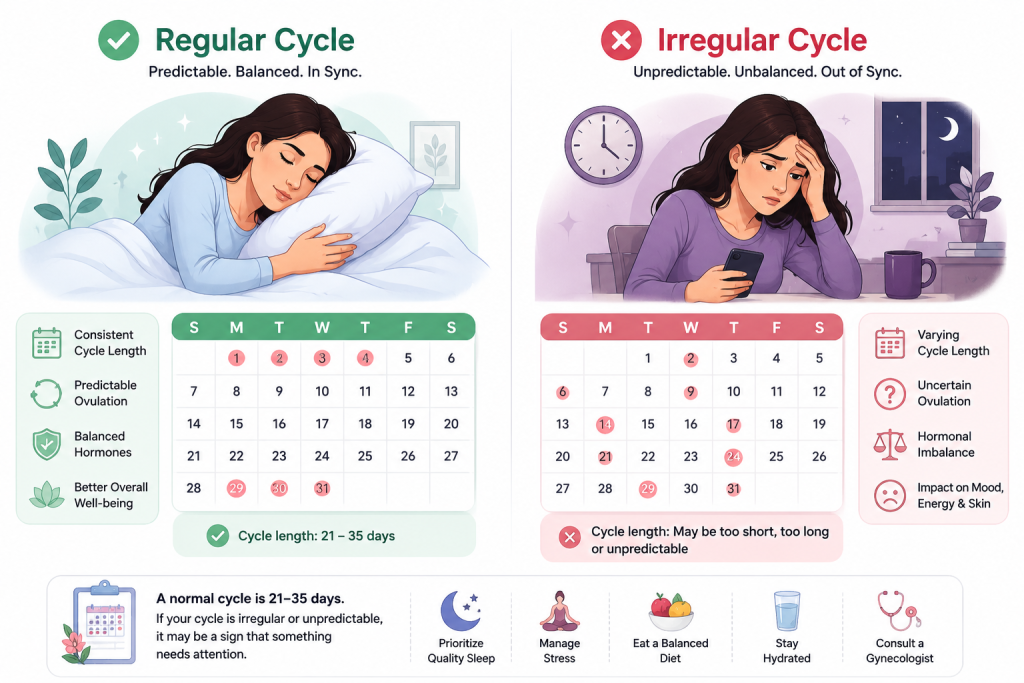
A normal cycle is 21-35 days. “Irregular” means it’s shorter, longer or completely unpredictable.
Poor sleep is one of the most overlooked causes.
Your cycle depends on finely tuned hormones. Those hormones depend on circadian rhythm. Erratic sleep-five hours Monday, seven Tuesday, three Wednesday-tells your body: “I don’t have a schedule.”
Your hormones can’t establish a pattern. They’re constantly re-calibrating.
Real Talk: Many women whose periods were “irregular my whole life” discovered that consistent 7-8 hour sleep for three months made their cycles regular for the first time. Was it truly irregular? Or was poor sleep the culprit?
Practical Advice:
- Track sleep alongside your period for two months
- Notice patterns: Do irregularities cluster around weeks of poor sleep?
- Improve sleep and re-track for 2-3 months to see if regularity improves
HOW SLEEP AFFECTS OVULATION, PCOS and FERTILITY
Ovulation requires precise hormone timing. Poor sleep disrupts this timing. Your LH surge might be too weak or too late. Your body might not ovulate at all.
For women with PCOS: Sleep is critical. PCOS involves insulin resistance, which poor sleep worsens. When you add sleep deprivation to PCOS, you get higher insulin, more inflammation and worse hormonal chaos.
Trying to conceive? Research shows women sleeping less than six hours take 43% longer to conceive than those sleeping 7-9 hours. Before expensive fertility treatments, prioritize sleep.
Did You Know? During deep sleep, your brain’s glymphatic system becomes 60% more active, clearing toxins that interfere with hormone production and reproductive health.
MORE THAN JUST LATE PERIODS
Poor sleep amplifies menstrual problems:
Period Pain: Sleep deprivation increases inflammation and lowers pain threshold. It also raises cortisol, which increases prostaglandins (the compounds that make your uterus contract). More cramping, more pain.
PMS: PMS is manageable when your nervous system is well-rested. Sleep-deprived? Your serotonin is already low, your emotional regulation is compromised. Then PMS hits on top of that. Suddenly you’re furious, exhausted and craving chocolate like your life depends on it.
Weight Gain & Metabolism: Poor sleep increases ghrelin (your hunger hormone) and decreases leptin (your “I’m full” hormone). Your body craves sugar and carbs. Additionally, women sleeping six hours or less consume an average of 385 extra calories daily. That’s 2,695 extra calories per week.
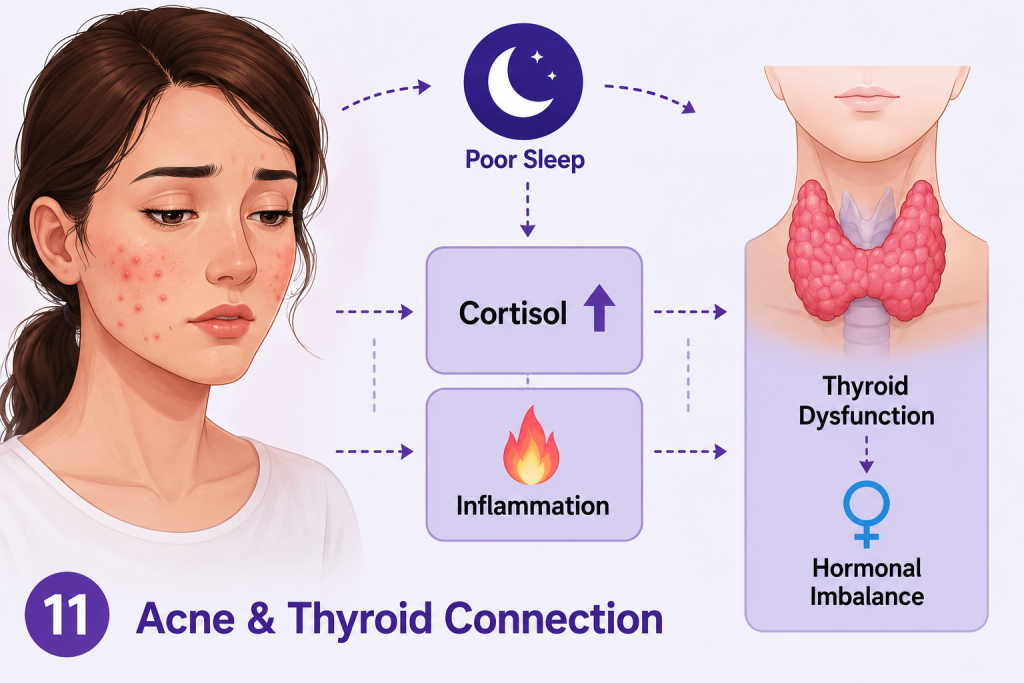
Acne & Thyroid: Sleep deprivation increases inflammation and cortisol, triggering acne. It also interferes with thyroid function. Women with poor sleep often have irregular periods AND thyroid dysfunction-these are connected.
MYTHS VS. FACTS
MYTH: “I’ll sleep more on weekends.”
FACT: Social jet lag is actually worse than consistent poor sleep. Your body needs rhythm, not catch-up sleep.
MYTH: “Five hours is enough if I’m used to it.”
FACT: You might feel adapted, but your hormones aren’t functioning normally. You’re just masking the deficit.
MYTH: “Coffee fixes tiredness.”
FACT: It masks it. Your body still needs sleep to repair and produce hormones.
MYTH: “My irregular period is genetic.”
FACT: Genetics sets your baseline. Poor sleep disrupts actual regularity. Try improving sleep for three months before accepting “that’s just me.”
SIGNS YOUR BODY IS BEGGING FOR BETTER SLEEP
- Waking unrefreshed despite 8+ hours in bed
- Night sweats or temperature issues
- Persistent fatigue coffee doesn’t fix
- Irregular, late or absent periods
- Worsening PMS symptoms
- Unexplained weight gain
- Constant sugar/carb cravings
- Brain fog or mood swings
- Difficulty concentrating or making decisions
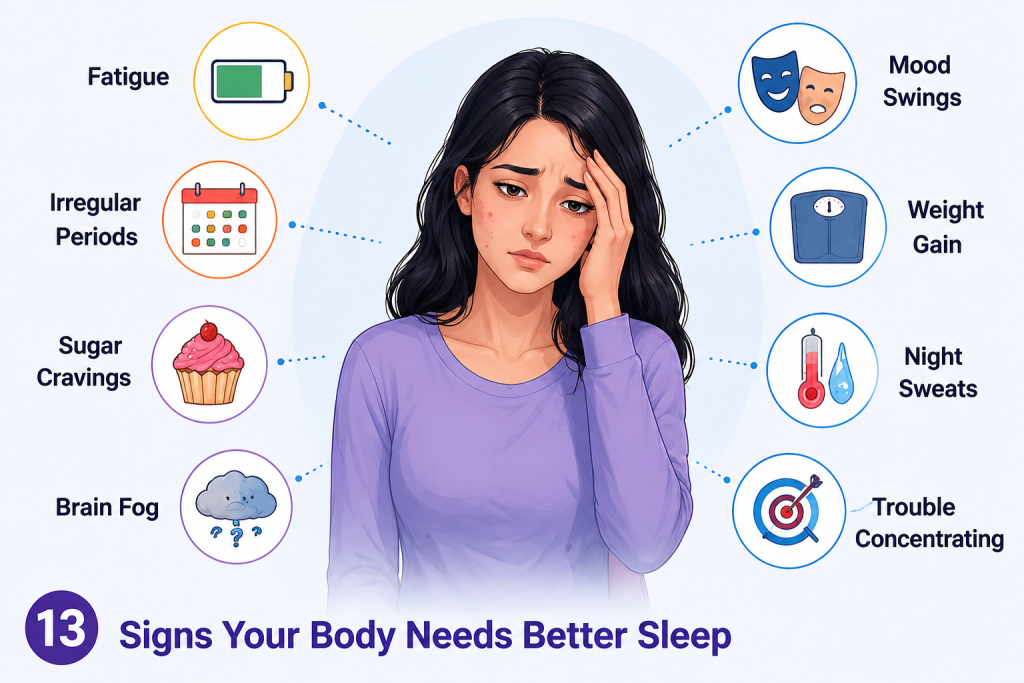
If you recognize multiple signs, your body is definitely trying to tell you something.
WHEN TO SEE A GYNECOLOGIST
Improve your sleep first. Many menstrual irregularities resolve when sleep improves.
But see a doctor if:
- Your period hasn’t returned despite three months of improved sleep
- Irregular cycles persist despite consistent 7-9 hour sleep
- You experience severe pain despite good sleep
- Trying to conceive without success after 6 months (including good sleep)
- You have symptoms of PCOS, thyroid issues or endometriosis
- Shift work has dramatically changed your cycle
Early evaluation can identify underlying conditions before they become harder to manage.
If your menstrual cycle remains irregular despite improved sleep and lifestyle changes, it may be time to consult a gynecologist. At Vasavi Hospitals, our women’s health specialists can identify underlying conditions and develop personalized treatment plans.
THE BOTTOM LINE
Your period is one of your body’s most important communication systems.
When it changes-becoming irregular, more painful or absent-something needs attention. That something could be poor sleep.
Your ovaries, your brain’s hormone-producing glands, your entire endocrine system depend on sleep. They’re not being dramatic. They’re asking for what every system in your body needs: rest.
If your sleep has been suffering, your hormones may be trying to tell you something.
Listen before your body starts shouting.
Start this week. Prioritize 7-9 hours of consistent sleep for three months. Notice how you feel. Notice if your symptoms shift.
And if things don’t improve despite genuinely consistent sleep? That’s when you reach out to a gynecologist. Because sleep might be a big part of the picture-but there might be other pieces too.
Your period has something to say.
Are you listening?
FREQUENTLY ASKED QUESTIONS
Q: How long until my cycle regulates after improving sleep? A: Most women notice changes within 4-8 weeks, but full hormonal normalization takes 2-3 months (2-3 complete cycles).
Q: I work night shifts. What can I do? A: Maintain the same sleep/wake schedule on days off, use bright light exposure during shifts and darkness during sleep and discuss with your doctor if periods become severely irregular.
Q: Can melatonin fix my menstrual problems? A: Melatonin helps you sleep better, which can eventually help regulate cycles. But actual sleep is the real fix-melatonin is a tool to help you achieve it.
Q: My doctor says it’s “just stress.” Should I be worried? A: Stress affects your cycle and stress often causes poor sleep. But don’t let that be the end of the conversation. Get evaluation if periods are very irregular despite stress reduction and better sleep.
Q: Can sleep alone treat PCOS? A: No. PCOS requires medical management. But better sleep significantly improves PCOS symptoms and makes treatment more effective.