
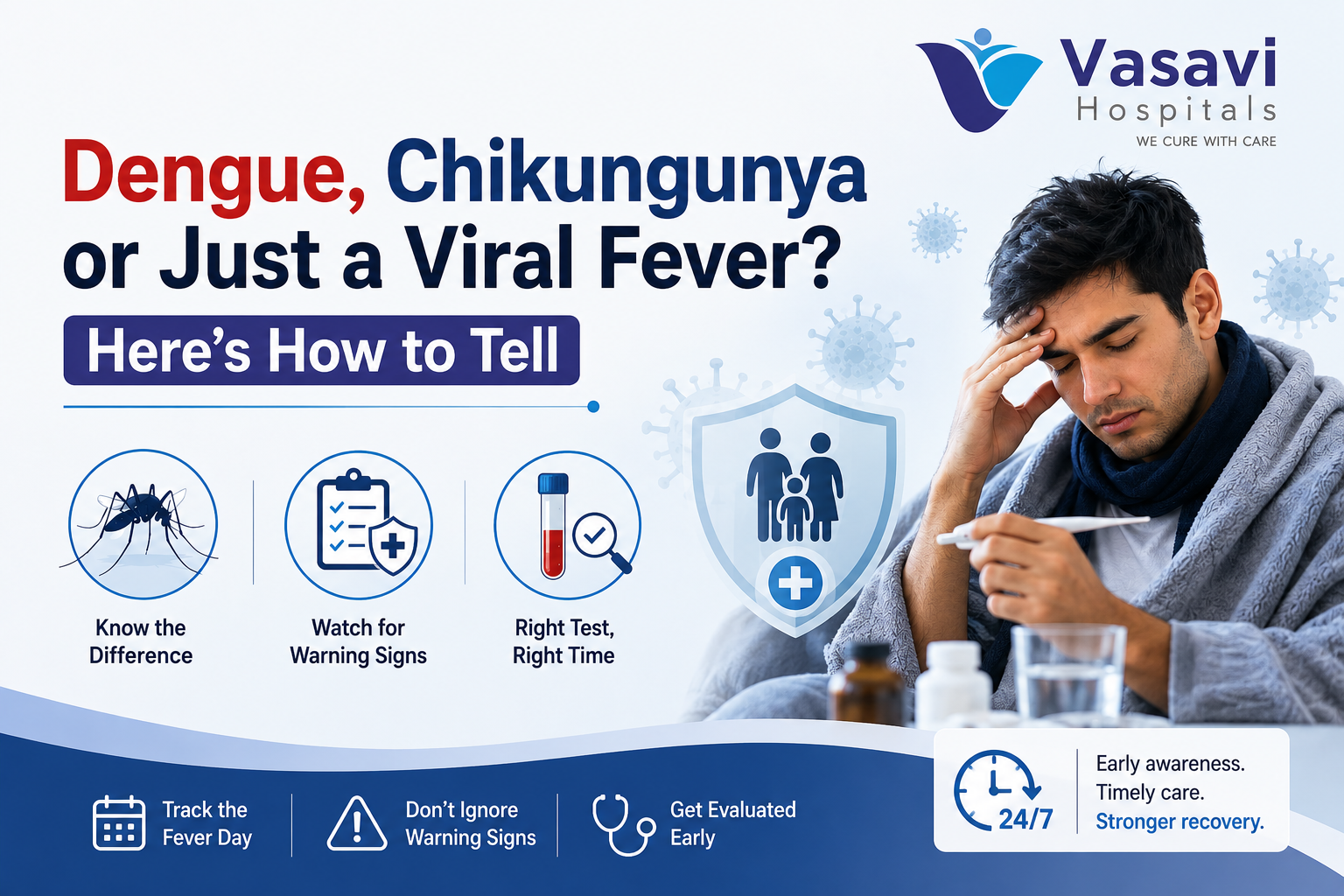
You wake up with a high fever, body pain and a heavy head.
Your first thought might be:
“Is this dengue?”
Then someone says, “It sounds like chikungunya.”
Another person says, “Don’t worry. It’s probably just viral fever.”
And suddenly, you’re searching symptoms on your phone and trying to diagnose yourself.
Here’s the honest answer:
In the first few days, dengue, chikungunya and other viral fevers can look remarkably similar.
Fever. Headache. Body pain. Tiredness. Sometimes a rash.
Even the symptoms that seem distinctive aren’t enough to confirm the diagnosis on their own. That is why guessing at home-or assuming that every fever is “just viral”-can sometimes delay the care you actually need.
What Usually Points to What?
| Symptom | Dengue | Chikungunya | Viral Fever |
| Fever | Often high and sudden | Often high and sudden | Mild to high |
| Body/muscle pain | Often significant | Common | Common |
| Severe joint pain | Possible | Very common | Usually milder |
| Pain behind the eyes | Common | Less typical | Less typical |
| Rash | Possible | Possible | Possible |
| Nausea/vomiting | Common | Possible | Possible |
| Bleeding | Can occur | Uncommon | Uncommon |
| Joint pain lasting weeks | Less typical | Can be prolonged | Uncommon |
Dengue commonly causes high fever with headache, pain behind the eyes, muscle/joint pain, nausea, vomiting and sometimes rash. Chikungunya is particularly known for sudden fever with severe, sometimes debilitating joint pain, which can continue for weeks or even months in some people.
An easy way to remember:
Dengue: high fever + intense body ache + headache/pain behind the eyes
Chikungunya: fever + severe joint pain, sometimes with swelling
Viral fever: fever with symptoms such as tiredness, headache, body ache, sore throat, cough or other symptoms depending on the virus
But treat these as clues, not conclusions.
Your symptoms can point a doctor in the right direction. They cannot reliably tell you which infection you have.
The Most Important Thing to Know About Dengue
Most people think:
“Once the fever comes down, I’m getting better.”
With dengue, that isn’t always true.
The critical phase of dengue can occur around days 3–7 after the illness begins, often around the time the fever starts to fall.
So imagine this:
Day 1: High fever.
Day 2: Body pain and headache.
Day 4: Fever suddenly drops.
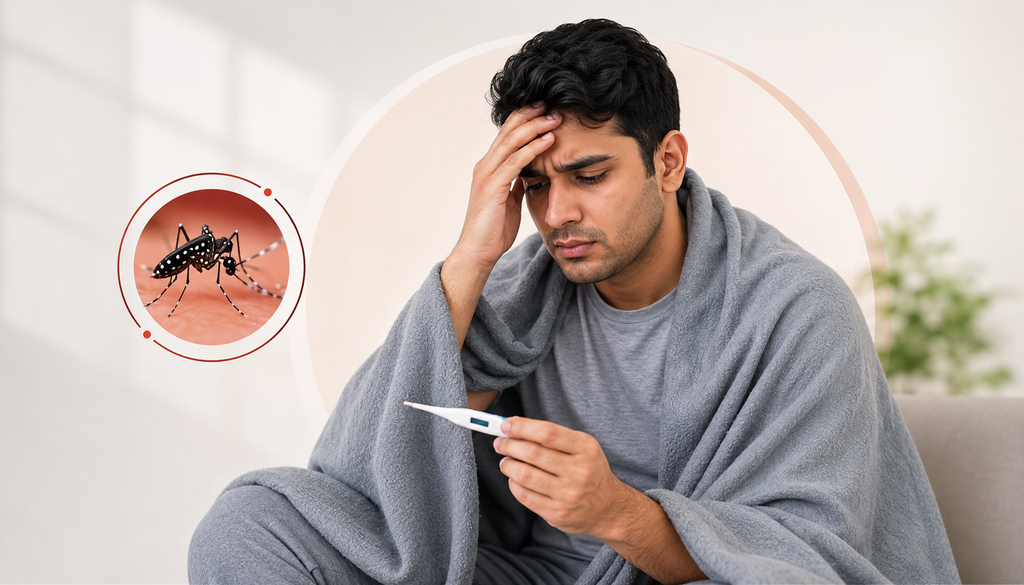
You feel relieved.
But this is exactly when you should continue watching for warning signs.
A falling temperature does not automatically mean the danger has passed.
Why the Right Test at the Right Time Matters
Another common mistake is thinking:
“I’ll do one dengue test. If it’s negative, I’m safe.”
Not necessarily.
Different dengue tests are useful at different stages of illness. A doctor may consider the number of days since the fever started, your symptoms, examination findings and blood-test results when deciding what testing is appropriate.
That’s why one of the simplest-and most useful-things you can tell your doctor is:
.
Why the Right Test at the Right Time Matters
Another common mistake is thinking:
“I’ll do one dengue test. If it’s negative, I’m safe.”
Not necessarily.
Different dengue tests are useful at different stages of illness. A doctor may consider the number of days since the fever started, your symptoms, examination findings and blood-test results when deciding what testing is appropriate.
That’s why one of the simplest-and most useful-things you can tell your doctor is:
“My fever started on Tuesday.”
That small detail can help determine which tests are appropriate and whether repeat testing or monitoring is needed.
And remember: a single blood report is not always the whole story.
Your doctor may monitor blood counts and other parameters over the following days, particularly if dengue is suspected.
When Should You See a Doctor?
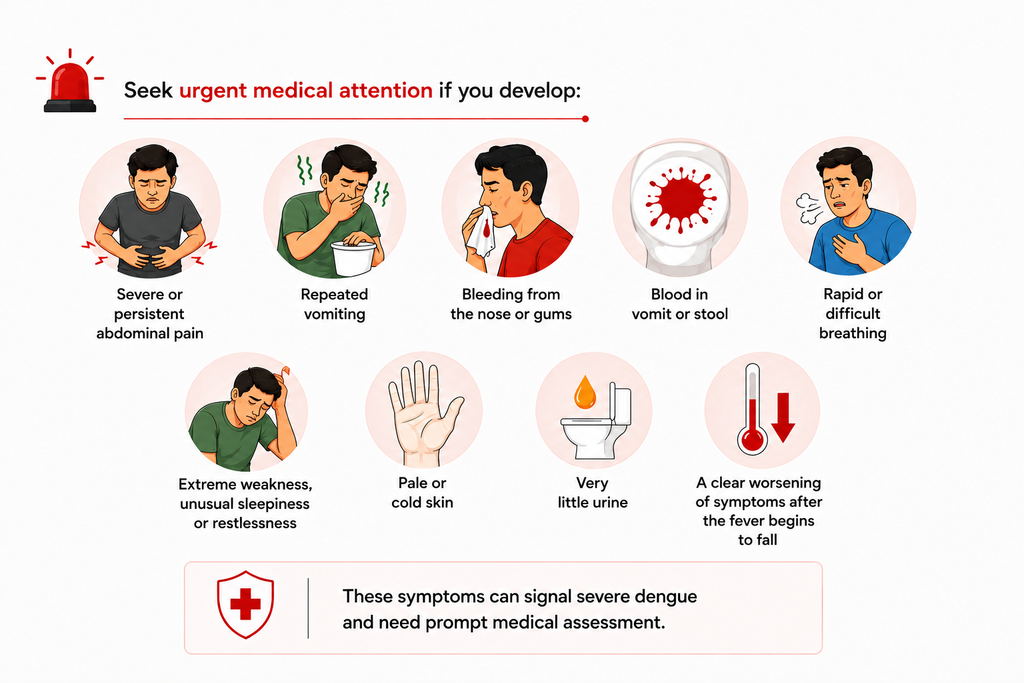
Don’t wait if:
- Your fever is persistent or getting worse
- You have severe body or joint pain
- You develop vomiting or abdominal pain
- You notice bleeding or unusual bruising
- You are passing much less urine
- You feel unusually weak, drowsy or breathless
- You are pregnant, elderly, very young or have conditions such as diabetes, heart, kidney or liver disease
People in these groups may require closer medical attention if they develop chikungunya or dengue.
And What About Chikungunya?
Chikungunya is usually not as dangerous as severe dengue, but that doesn’t mean it should be dismissed.
Its most recognizable feature is severe joint pain.
For some people, the fever improves within about a week, but the joint pain can continue for several weeks or even months. In a smaller number of patients, prolonged joint symptoms can persist much longer.
So if your fever is gone but your joints are still painful, swollen or stiff, don’t simply assume you need to “wait it out.”
Get evaluated.
Common Questions
Can I have dengue and chikungunya at the same time?
Yes, co-infection can occur because the same Aedes mosquito species can transmit both dengue and chikungunya viruses. Symptoms can overlap, which makes proper evaluation important.
How long can chikungunya joint pain last?
For many people, it improves within days or weeks. For some, joint pain can continue for months or longer.
Is a low platelet count always dangerous?
Not by itself. Doctors consider the platelet count along with your symptoms, trends in your blood reports, hydration status and other clinical findings.
Can I get dengue again?
Yes. Dengue has four virus serotypes and infection with one serotype does not provide lasting immunity against the others. A subsequent dengue infection can carry a higher risk of severe disease.
Will I need hospital admission?
Not necessarily. Many people with uncomplicated dengue or chikungunya recover with appropriate medical advice, fluids, rest and monitoring. Hospital care may be required when warning signs, severe disease or other risk factors are present.
In Short
Dengue, chikungunya and viral fever can wear almost the same mask at the beginning.
Don’t decide what you have based on one symptom.
Instead:
Know which day your fever started.
Watch for warning signs.
Avoid unsafe self-medication.
Get evaluated when symptoms persist or worsen.
Most fevers recover without serious complications.
The goal isn’t to panic over every fever.
It’s to make sure the fever that needs medical attention doesn’t get missed.
Consult Dr. Vinay Hosadurga at Vasavi Hospitals
If you have a sudden fever, severe body or joint pain, persistent vomiting, unusual weakness or symptoms that are getting worse, don’t try to diagnose yourself at home.
Dr. Vinay Hosadurga, Internal Medicine Specialist at Vasavi Hospitals, can evaluate your symptoms, consider the stage of your illness, recommend appropriate investigations and monitor your condition when required.
Your evaluation may include:
- Understanding exactly when your fever started
- Checking for dengue, chikungunya or other possible infections
- Recommending appropriate blood tests based on the stage of illness
- Monitoring blood counts when necessary
- Advising on safe medicines, hydration and recovery
- Explaining which warning signs require immediate medical attention
Book an appointment with Dr. Vinay Hosadurga at Vasavi Hospitals.
If you have dengue warning signs or are seriously unwell, seek emergency medical care rather than waiting for a routine appointment.