
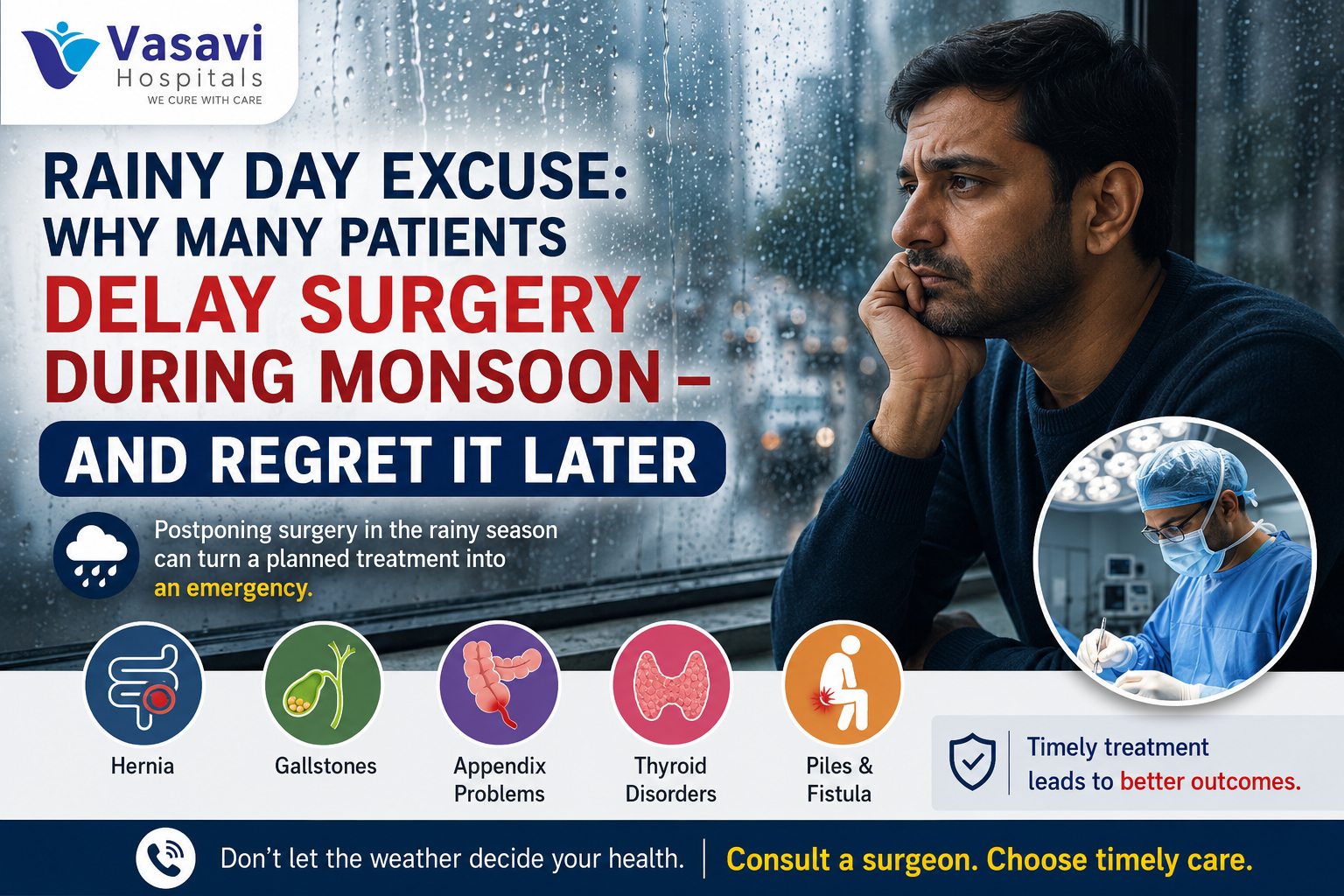
The Monsoon Delay That Often Becomes an Emergency
The rainy season arrives in Bangalore, bringing cooler weather, traffic congestion and frequent downpours.
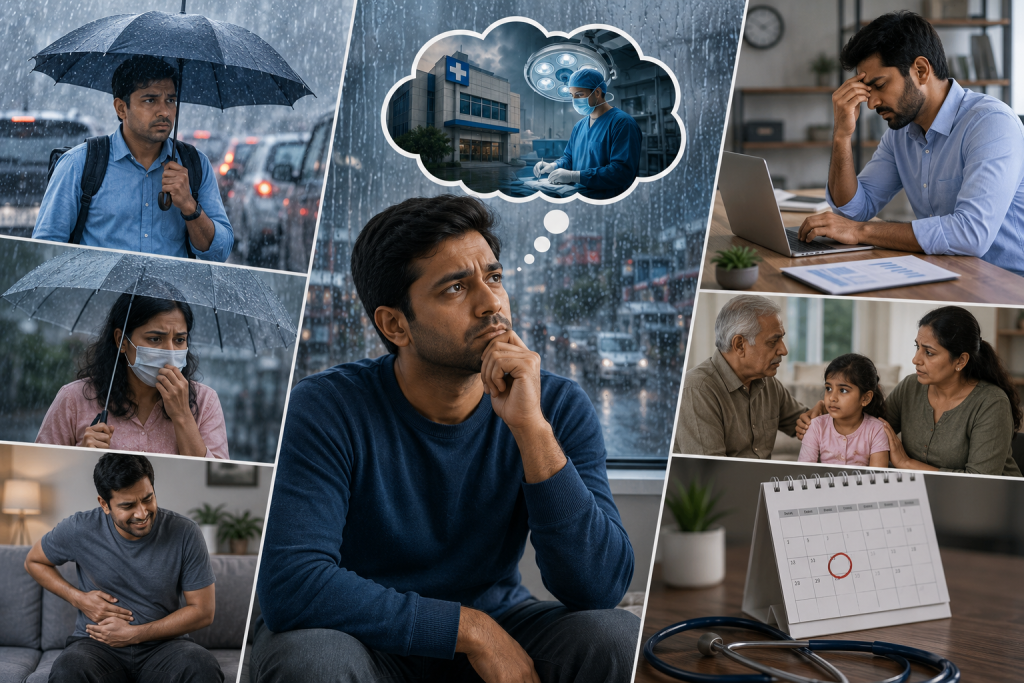
For many patients who have already been advised to undergo surgery, monsoon becomes an easy reason to postpone treatment.
“I’ll wait until the rains are over.”
“Travelling to the hospital will be difficult.”
“Maybe the condition will improve on its own.”
These thoughts are extremely common.
At Vasavi Hospitals, doctors frequently see patients delay planned surgeries during monsoon only to return weeks later with worsening symptoms, severe pain or emergency complications that could have been avoided through timely treatment.
While postponing surgery may seem harmless initially, certain conditions continue progressing regardless of the weather.
Why Patients Commonly Postpone Surgery During Monsoon
Many people assume that waiting a few weeks will not make much difference.
Common reasons include:
- Fear of travelling in heavy rain
- Work and school disruptions
- Concern about infections during rainy season
- Family commitments
- Temporary improvement in symptoms
- Belief that surgery can safely wait
Unfortunately, several surgical conditions can worsen rapidly when left untreated.
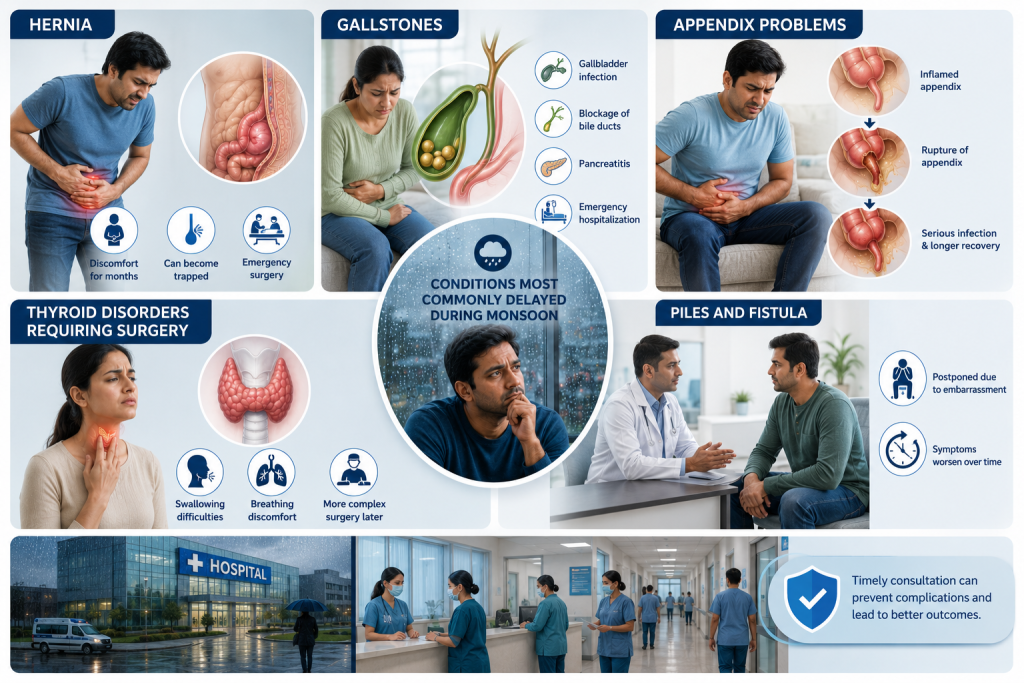
Conditions Most Commonly Delayed During Monsoon
Doctors often notice delays in treatment for:
Hernia
Many patients tolerate hernia-related discomfort for months.
However, untreated hernias can suddenly become trapped or strangulated, cutting off blood supply to the intestine and requiring emergency surgery.
Gallstones
Gallstones may remain silent for some time.
But delayed treatment can lead to:
- Severe gallbladder infection
- Blockage of bile ducts
- Pancreatitis
- Emergency hospitalization
Appendix Problems
Mild abdominal pain is often ignored.
A delayed appendix surgery can result in:
- Rupture of the appendix
- Serious infection
- Longer recovery periods
Thyroid Disorders Requiring Surgery
Some thyroid conditions continue growing despite minimal symptoms.
Delaying surgery may lead to:
- Swallowing difficulties
- Breathing discomfort
- More complex surgical procedures later
Piles and Fistula
Many patients postpone treatment due to embarrassment.
Over time, symptoms may worsen and affect daily activities significantly.
Common Myths About Surgery During Monsoon
Myth 1: Surgeries Should Not Be Done During Rainy Season
This is one of the most common misconceptions.
Modern operation theatres maintain strict infection-control measures throughout the year.
The success of surgery depends on medical condition, surgical expertise and hospital standards-not the weather outside.
Myth 2: Wounds Heal Slower During Monsoon
There is no evidence that properly managed surgical wounds heal poorly simply because it is raining.
Good nutrition, proper wound care and medical follow-up are far more important factors.
Myth 3: Waiting a Few Weeks Is Always Safe
Certain conditions may remain stable.
Others can worsen suddenly without warning.
Only a surgeon can determine whether a delay is medically safe.
What Happens When Surgical Conditions Are Ignored
When treatment is postponed unnecessarily:
- Pain often becomes more severe
- Emergency surgery may become necessary
- Hospital stay may increase
- Recovery can take longer
- Costs may become higher
- Risk of complications may increase
Planned surgery is generally safer and more predictable than emergency surgery.

Who Is Most Likely to Delay Surgery?
Certain groups commonly postpone treatment during monsoon:
Working Professionals
Busy schedules and commuting challenges often lead to repeated postponements.
Elderly Individuals
Many senior citizens avoid travel during rainy weather despite worsening symptoms.
Parents of Young Children
Family responsibilities often take priority over personal health.
Patients With Long-Standing Symptoms
People who have “managed” symptoms for months often underestimate the seriousness of their condition.
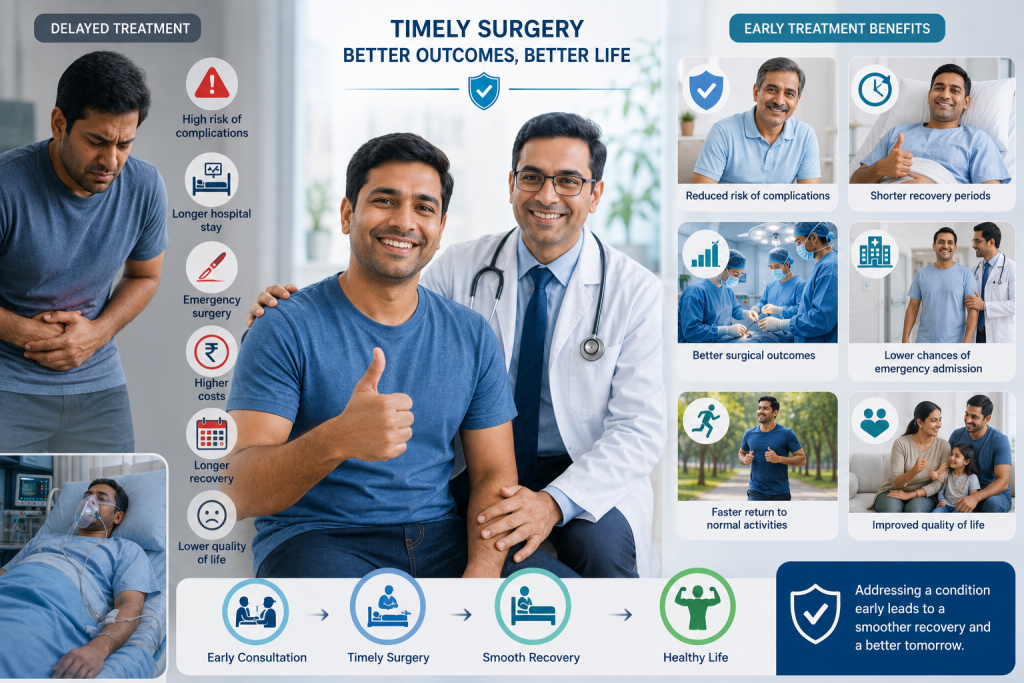
Why Timely Surgery Often Leads to Better Outcomes
Early treatment offers several advantages:
- Reduced risk of complications
- Shorter recovery periods
- Better surgical outcomes
- Lower chances of emergency admission
- Faster return to normal activities
- Improved quality of life
Addressing a condition before complications develop usually results in a smoother recovery.
How Vasavi Hospitals Supports Patients During Monsoon
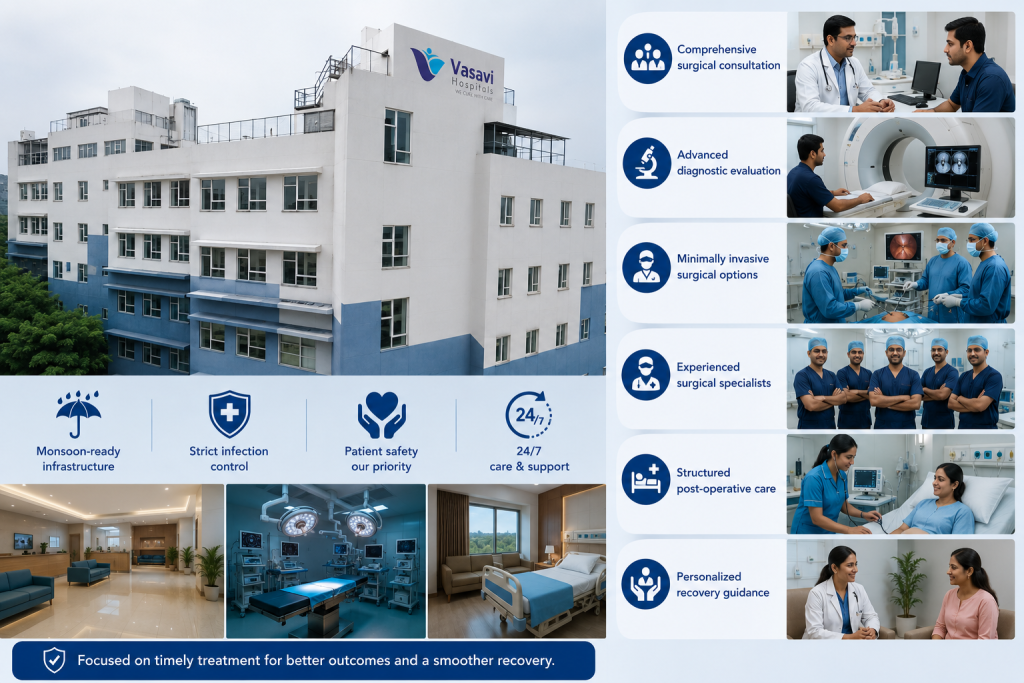
At Vasavi Hospitals, surgeons evaluate whether a condition requires immediate treatment or can safely be monitored.
Patients benefit from:
- Comprehensive surgical consultation
- Advanced diagnostic evaluation
- Minimally invasive surgical options
- Experienced surgical specialists
- Structured post-operative care
- Personalized recovery guidance
The focus remains on treating the condition at the right time before complications develop.
Don’t Let the Weather Decide Your Health
Rain may delay traffic.
It should not delay necessary medical care.
If a doctor has already advised surgery for conditions such as hernia, gallstones, appendix problems, thyroid disorders or other surgical concerns, postponing treatment simply because of monsoon may lead to avoidable complications.
A timely consultation can help determine whether waiting is safe-or whether treatment should proceed as planned.
Frequently Asked Questions
1. Is it safe to undergo surgery during monsoon?
Yes. Modern hospitals follow strict infection-control protocols throughout the year, making surgeries safe during monsoon.
2. Can delaying hernia surgery be dangerous?
Yes. Untreated hernias can become trapped or strangulated, leading to emergency situations that require urgent surgery.
3. Do surgical wounds heal slower during rainy season?
No. Proper wound care, nutrition and medical follow-up play a much bigger role in healing than seasonal weather changes.
4. Which surgeries are commonly delayed during monsoon?
Hernia surgery, gallstone removal, thyroid surgery, piles treatment and appendix-related procedures are commonly postponed.
5. When should I consult a surgeon immediately?
Seek medical attention if symptoms include severe pain, fever, vomiting, swelling, bleeding or sudden worsening of an existing condition.