

Evaluating heart health often requires detailed imaging of the coronary arteries. Two of the most widely used tests are CT Coronary Angiography (CTCA) and Conventional Coronary Angiography (CAG). Both tests provide important information, but they serve different purposes based on the patient’s symptoms, risk factors and clinical condition. Understanding how these tests differ can help you know why your cardiologist recommends one over the other.
What Is CT Coronary Angiography (CTCA)
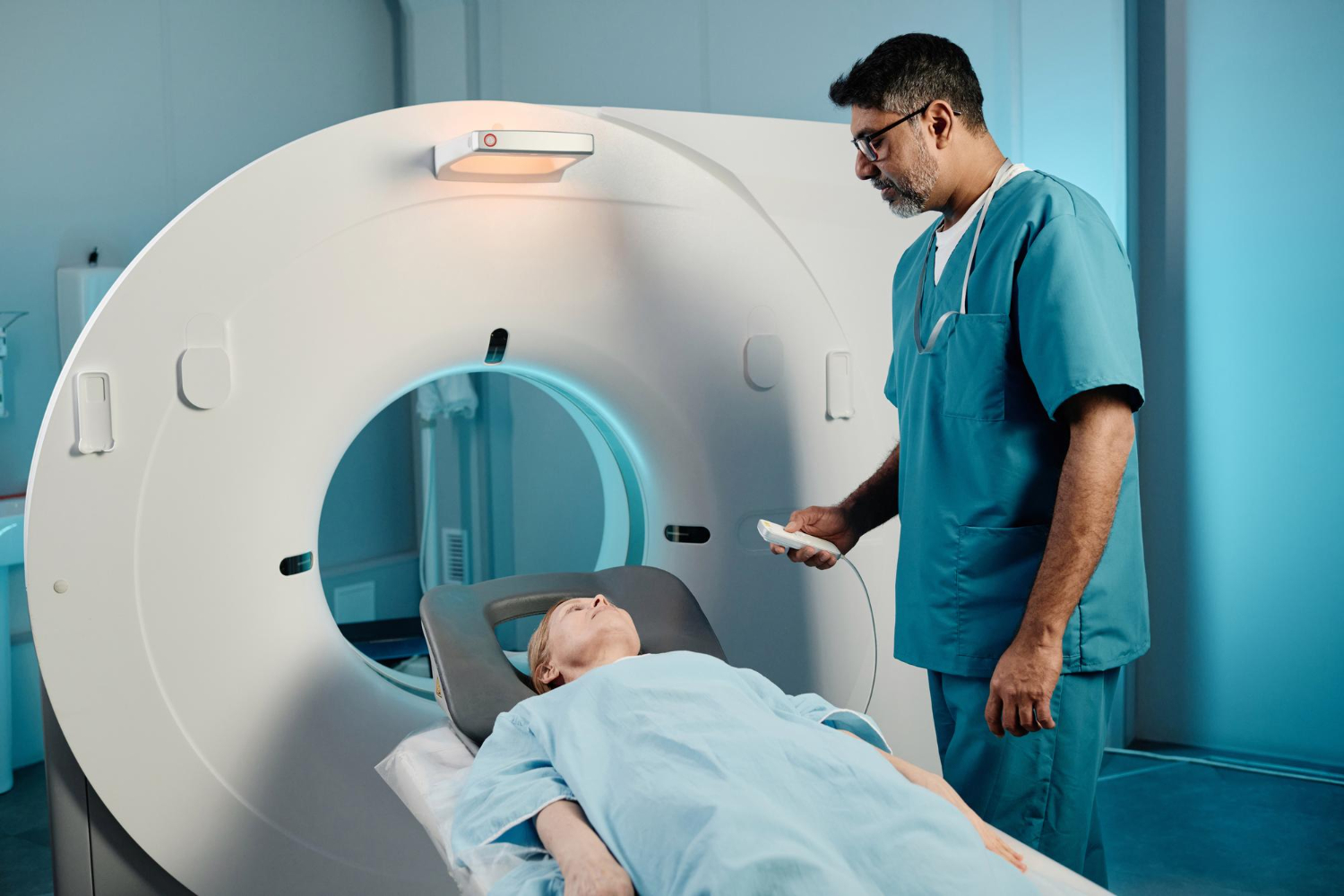
CT Coronary Angiography is a non-invasive, advanced imaging test that uses CT technology and contrast dye to visualise the coronary arteries. It helps identify plaque, narrowing, or structural abnormalities without inserting any catheter into the body.
Key Features of CTCA:
- Non-invasive
- Quick (usually completed within minutes)
- Useful for early detection
- Ideal for ruling out major blockages
- Provides detailed 3D images of the coronary arteries
CTCA is particularly helpful when doctors want to check for coronary artery disease in patients who have symptoms but are not critically unwell.
What Is Coronary Angiography (CAG)
Conventional Coronary Angiography is an invasive catheter-based procedure performed inside a Cath Lab. It involves inserting a thin tube (catheter) through the wrist or groin to directly visualise the coronary arteries in real-time.
Key Features of CAG:
- Gold standard test for detecting blockages
- Highly accurate and detailed
- Allows immediate treatment (angioplasty or stenting) if a major blockage is found
- Typically recommended when symptoms are stronger or test results suggest significant disease
Because CAG provides the most definitive assessment of coronary arteries, it is often used when intervention may be needed.
CTCA vs Coronary Angiography: Which Test Is Right for You?
Both tests assess coronary artery disease, but the choice depends on the clinical presentation.
CT Coronary Angiography Is Usually Recommended When:
- You have chest discomfort but low-to-moderate risk
- Stress test or ECG findings are inconclusive
- Your doctor wants to rule out blockages
- You need a quick, non-invasive evaluation
- There is suspicion of early plaque build-up
- You are young but have symptoms or family history
CTCA is often the first-line test when the goal is diagnosis, screening, or reassurance.
Coronary Angiography Is Usually Recommended When:

- Symptoms strongly suggest a major blockage
- You have unstable angina or persistent chest pain
- ECG or TMT results show high-risk changes
- CTCA already shows significant narrowing
- You have a history of stent, bypass, or previous heart attack
- Emergency evaluation is required
- Angioplasty or stenting might be needed immediately
CAG is preferred when your doctor needs a definitive view or suspects the need for immediate treatment.
Key Differences at a Glance
| Feature | CT Coronary Angiography (CTCA) | Conventional Coronary Angiography (CAG) |
| Procedure | Non-invasive CT scan | Invasive catheter-based test |
| Accuracy | High, but not equal to CAG | Gold standard |
| Purpose | Diagnose, screen, rule out disease | Diagnose + treat blockages |
| Time Required | 5-10 minutes | 20-40 minutes |
| Recovery | No downtime | Short recovery period |
| Best For | Low–moderate risk patients | Moderate-high risk or emergency cases |
Which Test Offers More Accurate Results?
Conventional Coronary Angiography remains the most accurate and definitive method for identifying coronary blockages. It allows the cardiologist to see blood flow in real-time and treat the blockage immediately using stents if required.
CTCA, however, is excellent for early detection, ruling out blockages, and identifying soft plaques that may not be visible on traditional tests.
In many cases, both tests complement each other depending on the patient’s needs.
When Should You Consult a Cardiologist?
Seek medical advice if you experience:
- Chest pain or heaviness
- Palpitations
- Breathlessness
- Unexplained fatigue
- A family history of heart disease
- Irregular ECG or stress test results
Early evaluation helps in choosing the right diagnostic approach and preventing complications.
Advanced Cardiac Imaging at Vasavi Hospitals
At Vasavi Hospitals, our Cardiology Department offers comprehensive heart evaluation supported by expert cardiologists, modern diagnostic equipment, and a State-of-the-art Cath Lab. Whether you need a CT Coronary Angiography for early screening or a Coronary Angiography for detailed evaluation, our team ensures accurate diagnosis and timely treatment.
Call Us: 080-71 500 500